A rooftop can look clean from the outside and still hide trapped moisture. A substation component can appear intact in daylight while carrying a heat signature that points to a developing issue. That is where thermal imaging vs visual inspection becomes a practical decision, not just a technical one.
For commercial and industrial assets, the right inspection method affects more than image quality. It affects safety exposure, downtime, maintenance planning, documentation, and how quickly a team can act on what it finds. In many cases, the question is not which method is better in the abstract. It is which method gives your team the clearest picture of asset condition with the least operational disruption.
Thermal imaging vs visual inspection: what is the difference?
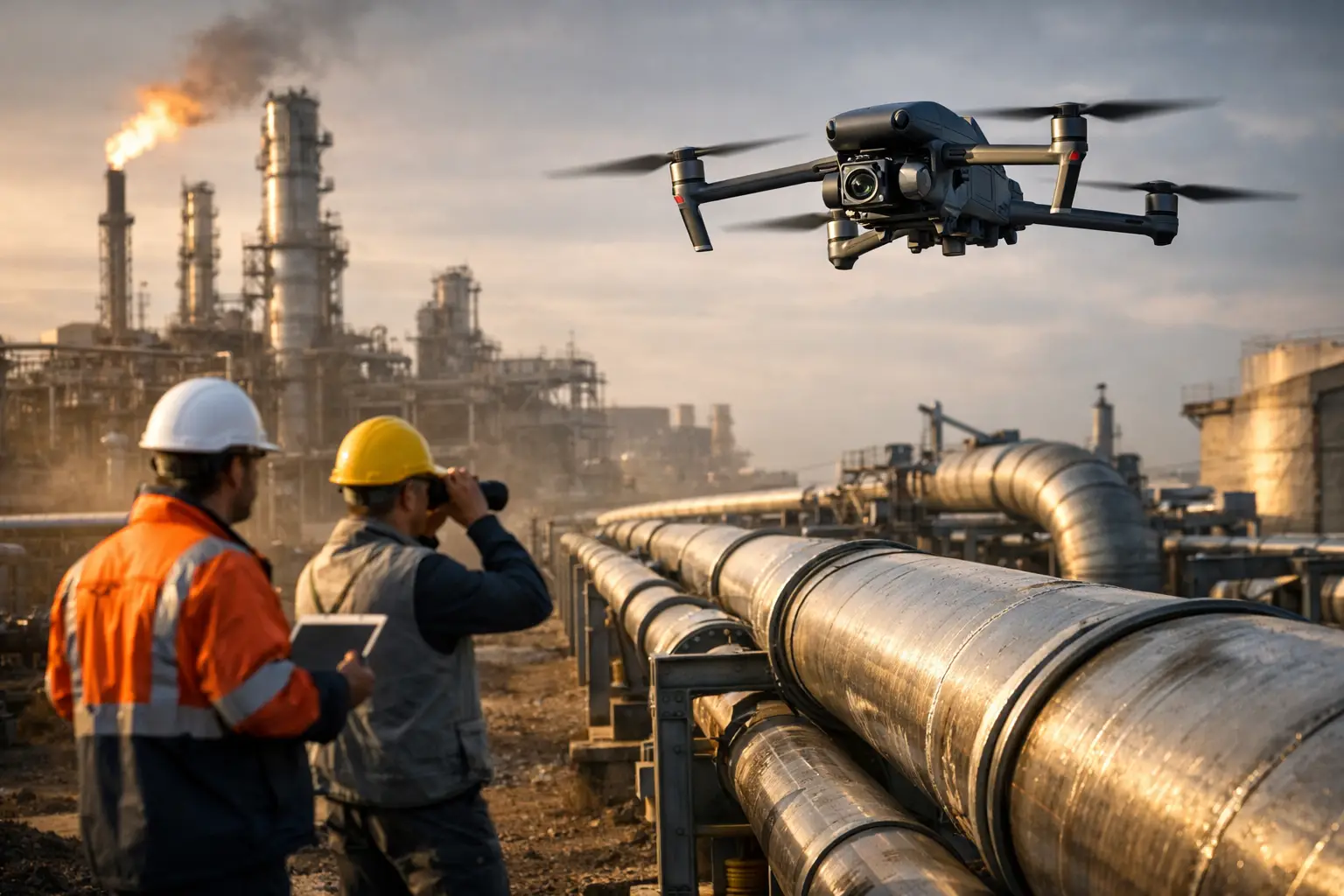
Visual inspection records what the eye can see. That includes surface damage, corrosion, missing components, loose connections, coating failure, ponding water, vegetation encroachment, storm damage, and visible wear. When captured by drones, visual inspection also gives teams access to elevated, confined, or hazardous areas without relying on lifts, rope access, or extended manual exposure.
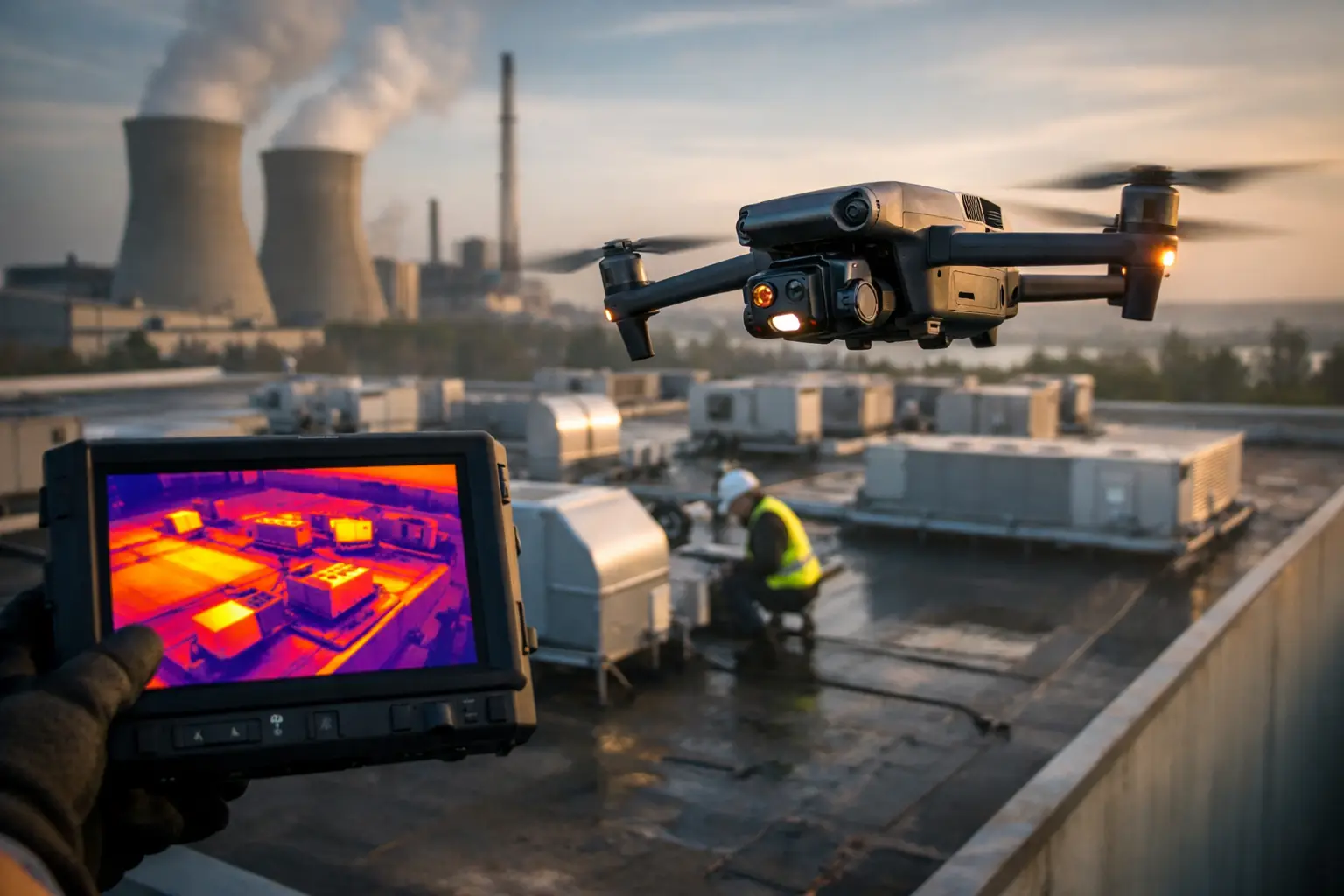
Thermal imaging records heat patterns rather than visible detail. It helps identify temperature anomalies that may indicate moisture intrusion, overloaded electrical components, insulation gaps, failing equipment, or hidden defects that do not show clearly in standard imagery. Thermal data does not tell the whole story on its own, but it often reveals where a closer look is needed.
That distinction matters. Visual inspection answers, What does it look like? Thermal imaging answers, What is behaving differently than it should? On complex assets, those are not the same question.
When visual inspection is the better fit
If your goal is to document condition, verify installation quality, capture damage, or track visible changes over time, visual inspection is usually the starting point. High-resolution imagery gives facility teams, engineers, insurers, and project managers a clear record of what was present on the day of capture.
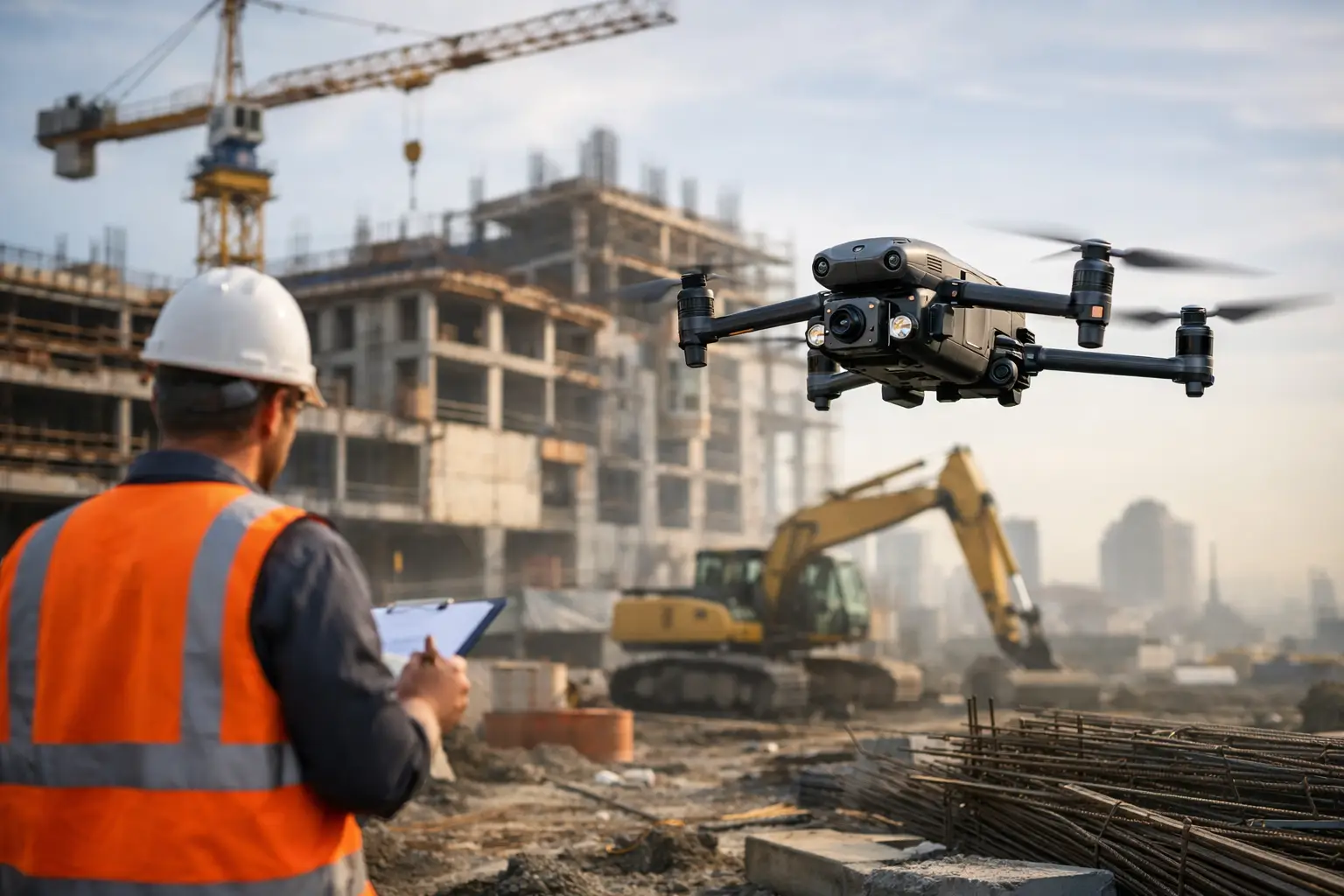
This is especially useful on construction sites, industrial roofs, telecom towers, pipelines, and exterior structural elements where visible defects drive the next decision. A site superintendent may need progress documentation. A facility manager may need close-up imagery of rooftop penetrations, membrane condition, or drainage areas. An insurance team may need post-loss documentation that shows where damage occurred and how widespread it is.
Visual inspection is also easier to interpret for a broader set of stakeholders. Most teams can look at a high-resolution image and quickly understand cracked sealant, missing flashing, corrosion, impact damage, or displaced components. It tends to be the most straightforward format for reporting, internal communication, and recordkeeping.
That said, visual inspection has limits. If a problem is developing below the surface, standard imagery may not show it until the issue becomes more advanced. By the time staining, deformation, or material failure appears, the underlying condition may already be affecting performance.
Where thermal imaging adds value
Thermal imaging becomes valuable when visible appearance is not enough. On electrical assets, elevated temperatures can point to imbalanced loads, resistance issues, or failing components. On commercial roofs, thermal patterns can help indicate areas of trapped moisture. On building envelopes or industrial facilities, temperature variation may reveal insulation deficiencies or air leakage paths.
In each of these cases, the advantage is early visibility. A component does not have to look damaged to behave abnormally. Thermal inspection helps teams prioritize where to investigate before a failure turns into an outage, leak, shutdown, or larger repair event.
For critical infrastructure and industrial operations, this can be a major benefit. A fast aerial thermal pass over a large roof, solar field, power-related asset, or elevated mechanical system can narrow the search area dramatically. Instead of sending crews to inspect every section manually, teams can focus time and resources on the locations that show potential anomalies.
Still, thermal imaging is not self-explanatory. A hot spot or cool area is not a diagnosis. It is an indicator that conditions in that location differ from surrounding areas. Interpretation depends on asset type, weather, load, time of day, surface material, and operating conditions. That is why thermal data is most useful when captured carefully and reviewed in context.
Why neither method should be treated as a standalone answer
This is where many inspection plans go off course. Some teams assume thermal imaging is automatically more advanced, so it must be better. Others rely only on visual documentation because it is familiar and easy to review. Both approaches can leave gaps.
A thermal image may show an anomaly but not explain the physical condition causing it. A visual image may show wear but miss the hidden issue driving it. Used alone, each method can produce an incomplete picture.
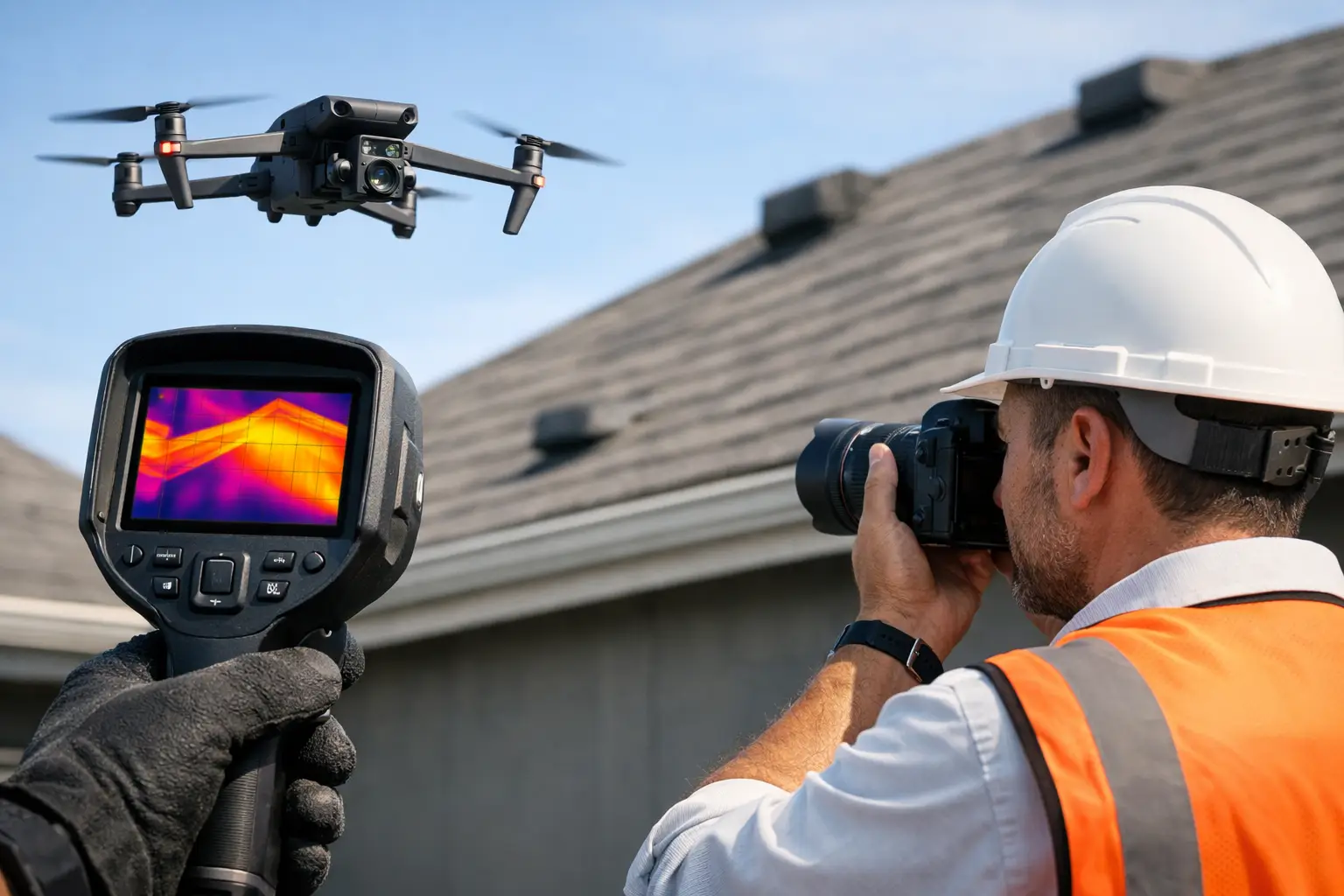
Used together, they become much more useful. Thermal imagery helps locate suspicious conditions. Visual imagery helps confirm what is physically present around those locations and supports reporting, maintenance planning, or engineering review. For many assets, this combined workflow is the most efficient path to actionable inspection data.
Consider an industrial rooftop after a storm. Visual imagery can document punctures, membrane displacement, flashing damage, and debris impact. Thermal imagery can help flag areas where moisture may have entered and spread below the surface. Or consider a utility-related asset. Thermal data may identify a component running hotter than expected, while visual imagery provides the detail needed to document surrounding hardware, condition, and accessibility.
Choosing the right method for the asset and objective
The best inspection method depends on what your team is trying to answer.
If the goal is general condition documentation, visible defect capture, construction progress records, insurance support, or exterior asset mapping, visual inspection is often the right lead method. It is efficient, broadly usable, and immediately understandable.
If the goal is to identify hidden moisture, detect abnormal heat behavior, scan energized equipment, or prioritize maintenance in areas where visible cues are limited, thermal imaging often delivers more value. It helps teams see conditions that standard photography cannot.
If the asset is large, high-risk, elevated, or expensive to access, the case for combining both methods gets stronger. Power infrastructure, industrial rooftops, manufacturing facilities, cooling systems, transmission-related assets, and telecom structures often benefit from a layered inspection approach because one data type alone may not be enough for confident next-step decisions.
Budget and timing also matter. Not every inspection requires thermal data, and not every visual inspection needs a deeper thermal pass. But when the cost of missing a developing issue is high, a more complete dataset often saves time and money later.
What decision-makers should ask before scheduling an inspection
Before choosing thermal imaging vs visual inspection, it helps to define the operational question first. Are you trying to document current condition for records or claims? Are you troubleshooting a suspected issue? Are you screening a large asset to focus maintenance resources? Are you trying to reduce manual exposure in a hazardous or hard-to-reach area?
The clearer the objective, the better the inspection plan.
It also helps to ask what conditions are required for reliable results. Thermal work, in particular, is sensitive to environmental and operating factors. Surface heating, weather patterns, recent rainfall, equipment load, and inspection timing can all affect what the camera captures. A disciplined provider should account for those variables rather than treating thermal collection as a simple add-on.
For visual inspection, the question is often less about whether the image can be captured and more about whether the coverage is complete enough to support a real decision. Wide aerial context is useful, but close, inspection-grade detail matters when teams are evaluating defects, documenting damage, or planning repairs.
The business case for drone-based inspection workflows
For large commercial and industrial properties, drone-based thermal and visual inspection can reduce the need for ladders, lifts, shutdowns, and prolonged manual access. That does not replace qualified engineers, electricians, roof consultants, or maintenance professionals. It gives them better field data with less exposure and less wasted time.
This matters most when assets are spread out, elevated, or operationally sensitive. A disciplined aerial workflow can capture broad coverage quickly, document hard-to-reach areas, and produce imagery that supports maintenance records, insurance documentation, engineering review, and project management.
For organizations managing facilities across Georgia, Alabama, South Carolina, or Tennessee, especially in sectors where safety and uptime are tightly linked, the inspection method should not be chosen by habit. It should be chosen by what the asset requires and what the decision demands.
Thermal imaging and visual inspection are not competing tools in most serious inspection programs. They are different ways of seeing the same asset. The right choice is the one that helps your team move from uncertainty to a defensible next step with clear documentation to support it.