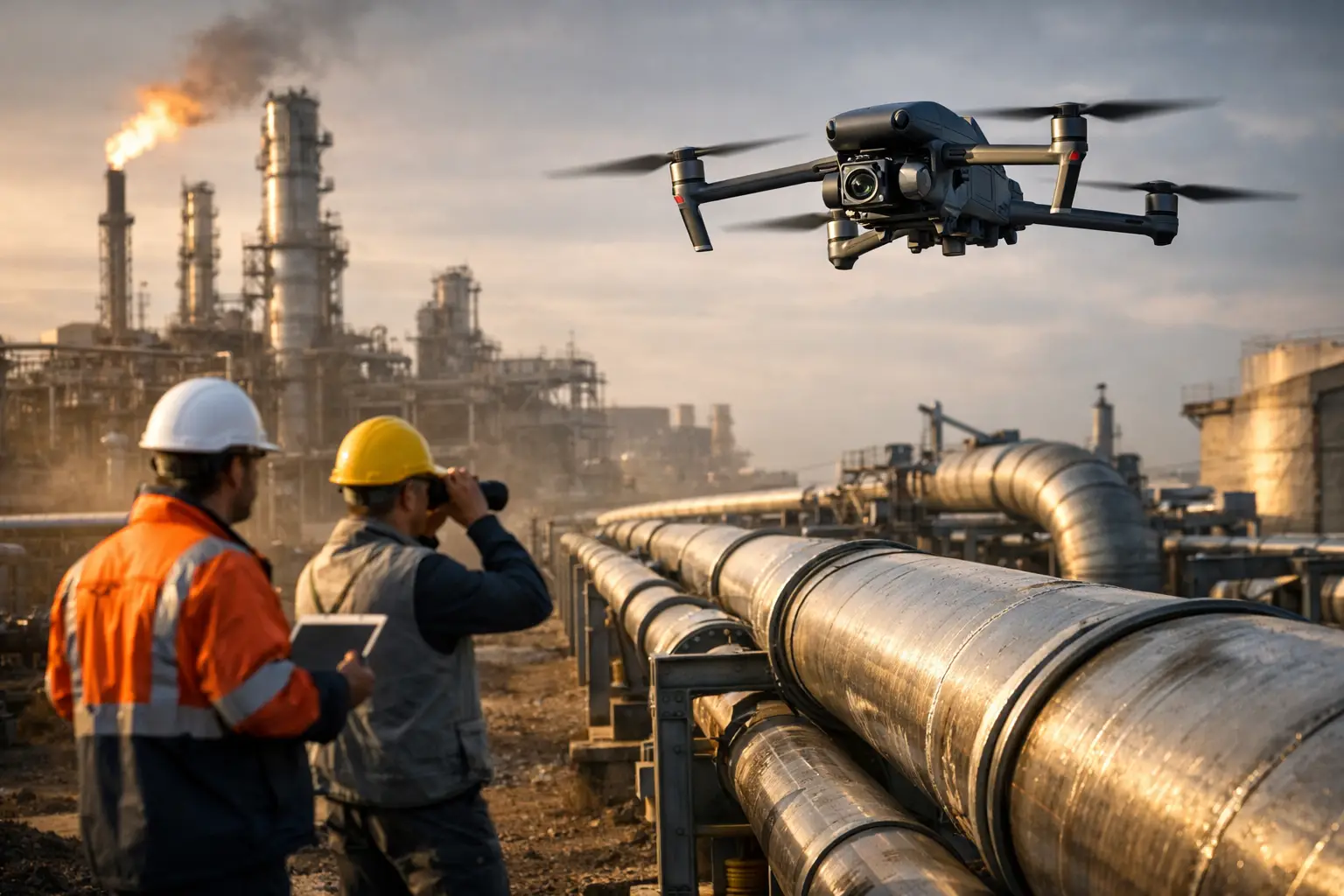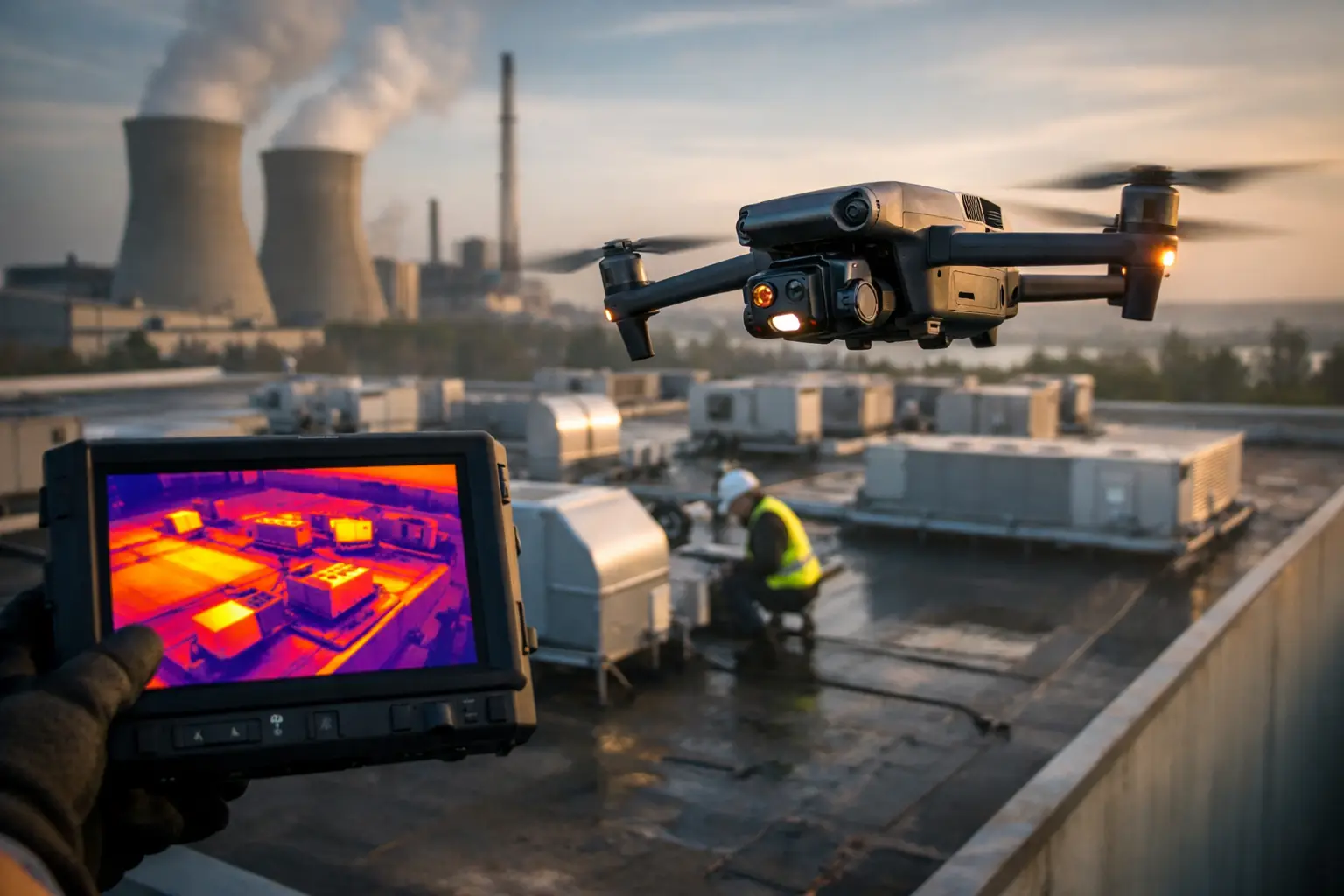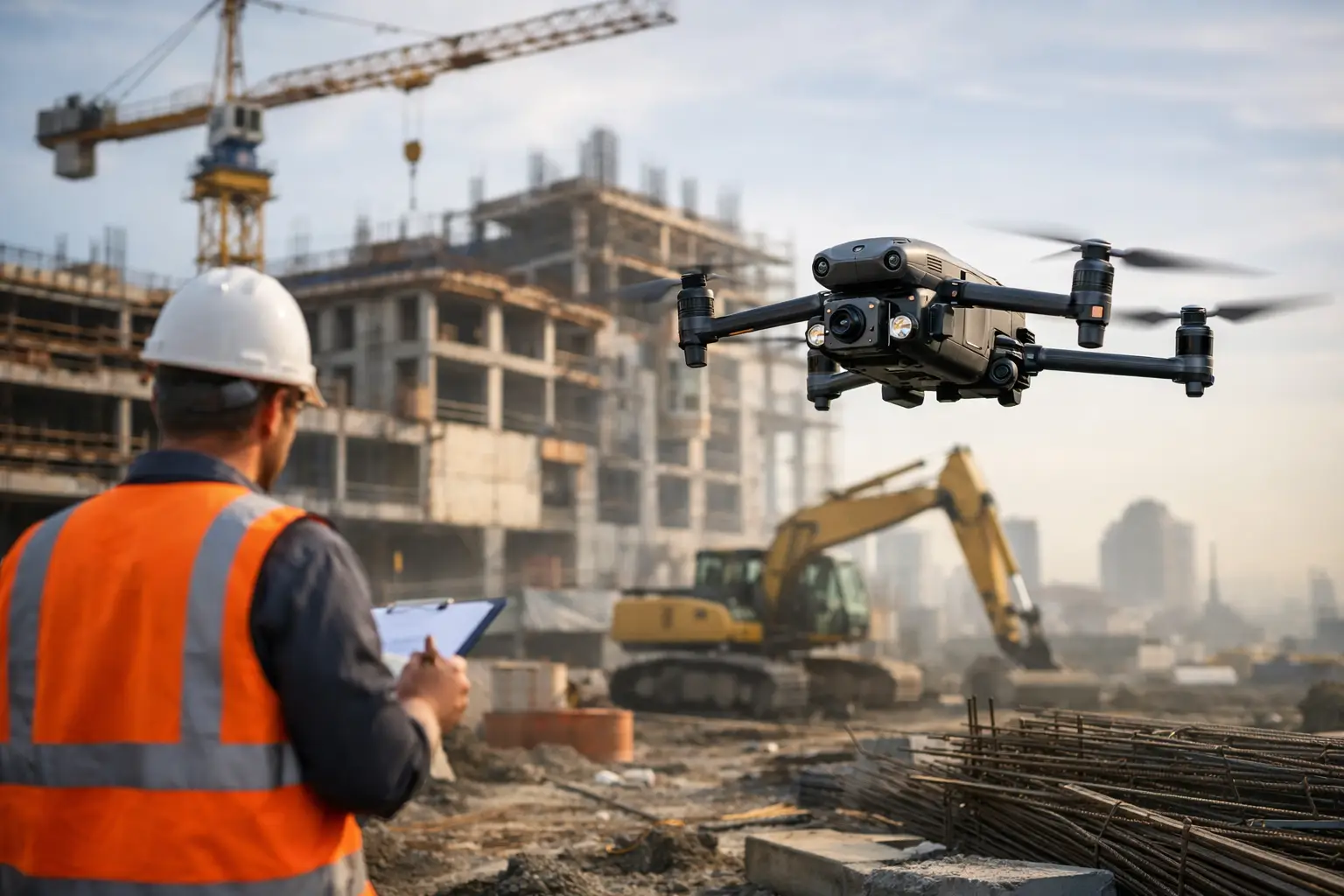
A roof leak over a warehouse floor, production line, or electrical room is rarely just a roof problem. It becomes a schedule problem, a safety problem, and often a cost problem. That is why a thermal drone roof inspection has become a practical tool for commercial and industrial teams that need faster visibility across large roof systems without putting people on the roof for every initial assessment.
For facility managers, contractors, engineers, and insurance teams, the value is straightforward. Thermal imagery can help identify surface temperature differences that may point to trapped moisture, insulation failure, drainage concerns, or areas that deserve closer review. When that data is collected by drone, large roof areas can be documented quickly, with less disruption and less exposure than traditional walk-only methods.
What a thermal drone roof inspection actually shows
A thermal drone roof inspection does not diagnose every roofing issue on its own, and it does not replace a qualified roofer, consultant, or engineer. What it does well is show temperature patterns across the roof surface that may indicate conditions worth investigating.
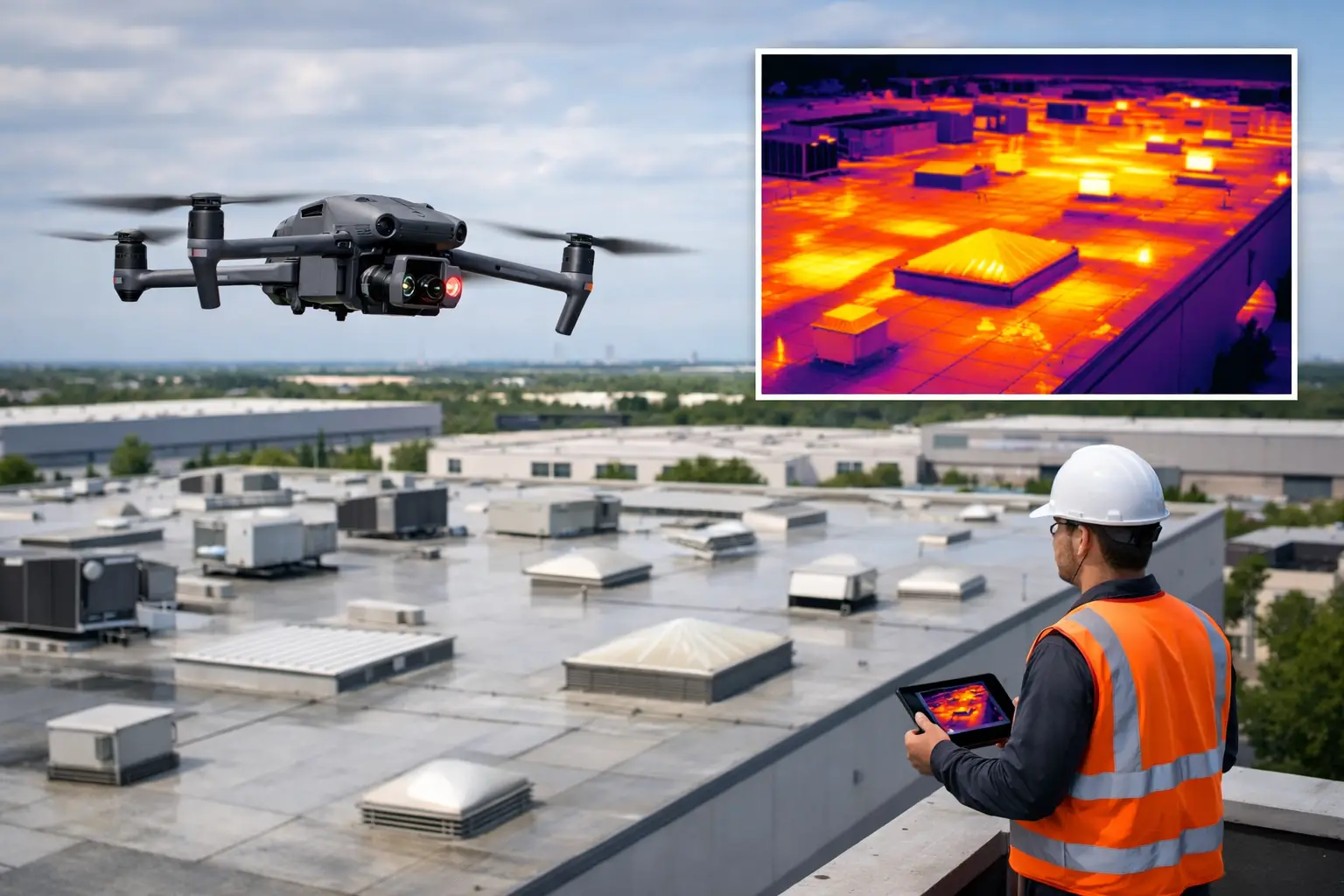
On a commercial roof, wet insulation often retains heat differently than dry materials. After the right weather cycle, thermal imagery may reveal anomalies that align with possible moisture intrusion below the membrane. It can also help show uneven heat signatures around seams, penetrations, rooftop units, flashing transitions, or repaired sections that are aging differently than surrounding areas.
That matters on large assets because the problem area is not always where water shows up inside the building. Leaks can travel. Thermal data gives operations and maintenance teams a broader view, which helps narrow down where to send repair crews or where to perform more detailed testing.
Why drone-based roof inspection makes sense on commercial properties
The larger and more complex the roof, the harder it is to inspect efficiently on foot alone. Distribution centers, manufacturing plants, hospitals, schools, telecom facilities, and utility structures often have expansive roof surfaces, equipment congestion, limited access points, or active operations below.
Using a drone changes the first phase of the workflow. Instead of relying only on manual walking, crews can capture visual and thermal coverage from above with speed and consistency. That can reduce the time spent locating suspect areas, lower the amount of unnecessary foot traffic on the roof, and create a visual record that can be reviewed after the flight.
For many organizations, the documentation is just as important as the images themselves. A drone inspection can support maintenance planning, contractor coordination, insurance documentation, and capital budgeting by giving stakeholders a shared view of current conditions. That is especially useful when several teams need to evaluate the same roof but are not all on site at the same time.
When thermal drone roof inspection works best
Thermal roof work depends heavily on timing and conditions. The best results usually come when the roof has had enough solar loading during the day and the inspection is performed during the proper cooling period, when differences between wet and dry areas are more visible.
That means success is not just about flying a drone with a thermal camera. It depends on weather history, roof type, moisture conditions, ambient temperature, cloud cover, wind, and the timing of the flight. A membrane roof on a clear day may produce useful results, while a roof inspected under poor thermal conditions may not show much at all.
This is one of the biggest reasons commercial clients should treat thermal inspections as a professional data collection task, not a simple photo flight. A field-ready operator understands that thermal imagery is only useful when mission planning, site safety, and environmental conditions are handled correctly.
Roof types and site conditions matter
Some roof systems are more suitable for thermal review than others, and some conditions create clearer patterns. Low-slope commercial roofs often provide the best opportunity, especially when moisture below the membrane causes measurable thermal contrast.
By comparison, heavily shaded roofs, reflective surfaces, active rainfall, recent storms, or equipment-dense rooftops can complicate interpretation. Rooftop HVAC units, vents, exhaust systems, and mechanical heat sources may also create temperature signatures that need to be separated from potential roofing issues. That does not make the inspection less valuable, but it does mean interpretation should stay disciplined and tied to the building context.
What decision-makers gain from the data
The biggest benefit is speed to visibility. A large roof can be screened far faster with aerial thermal and visual imaging than with a manual search alone. That helps teams make earlier decisions about where to investigate, where to patch, whether to bring in a roofing consultant, or whether conditions suggest a broader replacement discussion.
There is also a safety benefit. Reducing unnecessary roof access lowers exposure for internal staff and contractors, particularly on facilities with fall hazards, limited access, fragile zones, or operational constraints. In active industrial settings, cutting down avoidable foot traffic is often a meaningful risk-control measure.
Then there is the documentation benefit. Thermal and visual imagery can help create a date-stamped record of conditions at a given point in time. For insurance carriers, claims teams, and property owners, that can support clearer communication after storms, leaks, or suspected damage events. For construction and facility teams, it can also support maintenance histories and scope discussions.
Limits worth understanding before you schedule a flight
A professional article on this topic should be clear about what thermal can and cannot do. Thermal imaging shows surface temperature differences. It does not confirm structural integrity, certify a roof, or by itself prove the exact source of a leak.
False positives are possible. Ponding history, debris, rooftop equipment, recent repairs, and surface contamination can affect the thermal picture. False negatives are possible too, especially if inspection conditions are poor or moisture levels are too limited to create a visible thermal response.
That is why the best use of thermal drone data is as a decision-support layer. It helps identify suspect areas, improve targeting, and support follow-up by roofing, engineering, or maintenance professionals. In practice, that often leads to better use of time and fewer blind inspection efforts.
What to expect from a professional roof inspection workflow
On complex commercial and industrial properties, the workflow should start long before takeoff. Site conditions, roof layout, nearby obstacles, safety constraints, and airspace considerations all need review. If the property includes sensitive operations, active construction, utility infrastructure, or restricted access areas, planning becomes even more important.
The flight itself typically captures both thermal and high-resolution visual imagery. Pairing those datasets matters. Thermal anomalies are more useful when teams can compare them against standard imagery to understand whether the area lines up with drains, seams, patches, penetrations, equipment, or other roof features.
After collection, imagery should be organized into a usable deliverable rather than a folder of unprocessed files. For most clients, that means clearly labeled images, anomaly references, and documentation that can be shared with operations, maintenance, engineering, or claims stakeholders. The goal is not more media. The goal is actionable visual intelligence.
For organizations operating across Georgia, Alabama, South Carolina, and Tennessee, that kind of disciplined field execution can be especially valuable after severe weather, during outage planning, or when multiple facilities need to be screened quickly.
Choosing the right provider for thermal drone roof inspection
Not every drone operator is built for inspection work. Commercial roof assessment requires more than flight ability. It requires mission planning, safe field procedures, thermal collection discipline, and an understanding of how business clients actually use the data.
A qualified provider should be FAA Part 107 certified, properly insured, and comfortable working around commercial and industrial assets. Just as important, they should communicate clearly about limits, timing, and deliverables. If an operator promises that thermal imaging alone will solve every roof issue, that is a warning sign.
The stronger approach is practical and field-tested. Capture the data under the right conditions, document it clearly, and provide material that helps the client make the next decision with more confidence. That is the standard serious asset owners should expect from an inspection partner such as Air Reel Technologies.
A roof problem rarely waits for a convenient time, and large facilities do not benefit from guesswork. When timing, conditions, and execution are handled correctly, thermal drone roof inspection gives commercial teams a faster way to see more, narrow the search, and move the right people toward the right next step.