A roof leak over a warehouse, plant, or commercial facility rarely stays a roof problem for long. Water intrusion can affect inventory, electrical systems, insulation, tenant spaces, and production schedules. That is why knowing how to inspect rooftops with drones matters for facility teams, contractors, engineers, and insurance stakeholders who need fast, clear documentation without putting people at unnecessary risk.
For large or hard-to-access roofs, drones are not a novelty. They are a practical inspection tool that helps teams document conditions, identify visible problem areas, and prioritize follow-up work. The value is not just in getting airborne. It is in running a disciplined inspection workflow that captures useful data, respects site safety requirements, and produces imagery that supports maintenance, claims, and operational decisions.
How to inspect rooftops with drones the right way
A useful drone roof inspection starts before the aircraft leaves the ground. Commercial rooftops often include HVAC systems, vents, skylights, parapets, drains, solar equipment, lightning protection, and restricted access points. On industrial and critical infrastructure properties, there may also be active operations, security procedures, energized equipment, or sensitive areas that affect how the mission is planned.
The first step is defining the inspection objective. A post-storm damage review is different from a preventative maintenance survey. A construction punch-list flight is different from a leak investigation. When the scope is clear, the pilot and project team can decide what imagery is needed, which roof sections matter most, whether thermal imaging is appropriate, and what level of detail the final deliverables should include.
That planning step also determines whether the inspection is mainly visual, thermal, or both. Standard high-resolution imagery is often enough to document membrane damage, standing water, flashing issues, punctures, seam concerns, loose materials, drainage problems, or obvious equipment-related wear. Thermal imaging can add value when the goal is to identify moisture patterns, heat anomalies, or insulation concerns, but only under the right conditions. It is helpful, not automatic.
Start with site safety, airspace, and operational controls
If you are inspecting a commercial or industrial roof with a drone, safety and compliance are part of the inspection process, not an add-on. That means confirming FAA Part 107 compliance, checking airspace requirements, reviewing weather, and coordinating with site contacts before arrival. Wind, rain, glare, and heat can all affect image quality and flight stability, and rooftop inspections near populated areas or active facilities require tighter operational control than an open-field flight.
A disciplined operator will also evaluate launch and recovery areas, building height, nearby structures, antennas, wires, cranes, and other obstructions. For facilities with vehicle traffic, contractors, or shift operations, it helps to establish a controlled work zone and notify relevant personnel. The goal is simple: get the data without creating a new hazard.
This is one reason many organizations use a professional drone services provider instead of assigning the task informally. The roof may look straightforward on a map, but complex facilities rarely are. Experienced field teams understand how to operate around real-world constraints while still capturing usable inspection documentation.
What the pilot should capture during a rooftop inspection
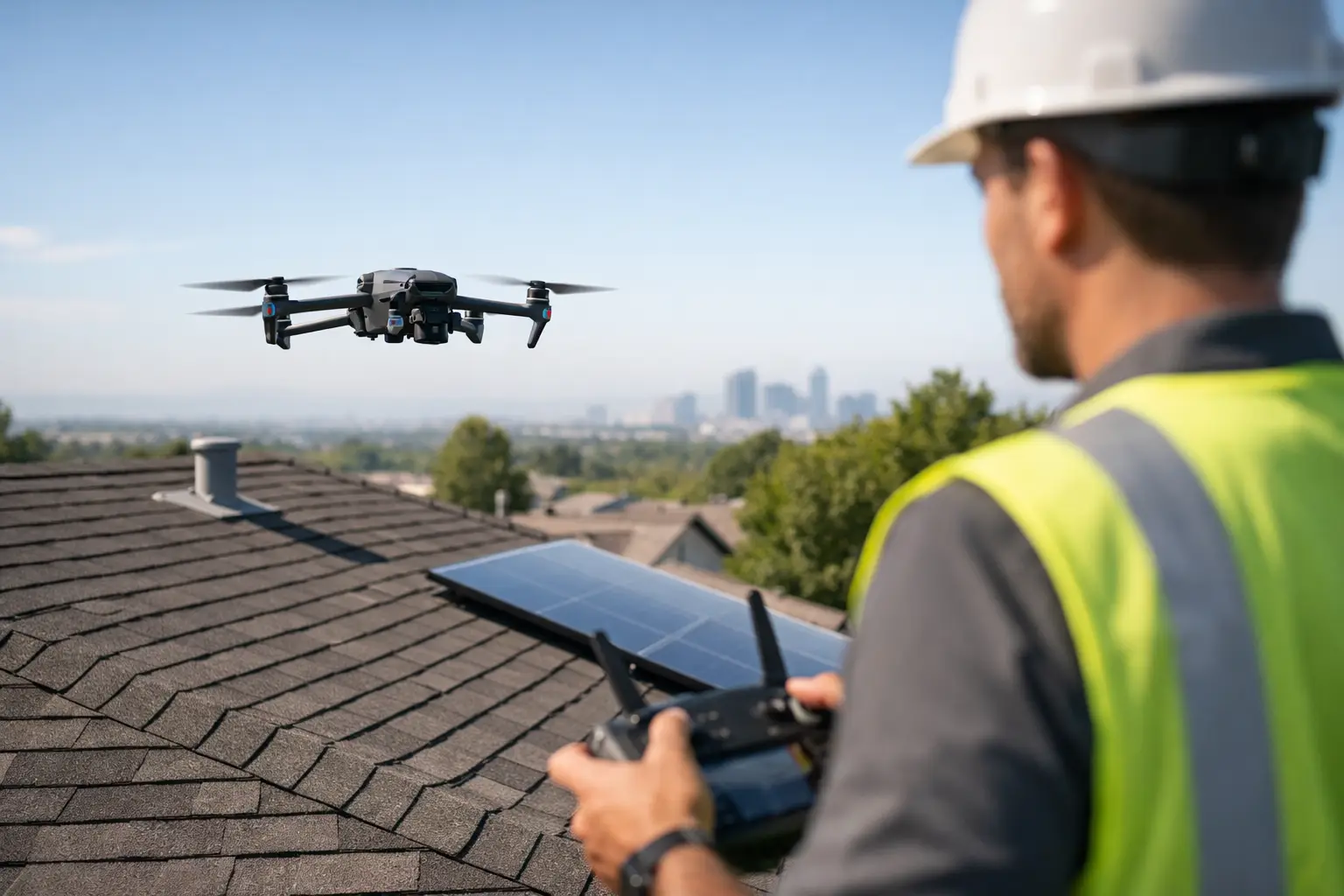
The best rooftop drone inspections combine broad context with close visual detail. Wide overhead passes establish the overall roof layout, drainage patterns, equipment locations, and affected zones. Lower-altitude oblique images help document edges, penetrations, flashing transitions, rooftop units, and condition changes that are harder to understand from a straight-down view alone.
For most commercial inspection work, image consistency matters as much as image quality. If the goal is tracking recurring issues over time, comparing storm events, or sharing findings across operations and insurance teams, the photos need to be systematic. Random flyovers produce interesting footage. Planned image capture produces documentation.
A strong inspection usually includes full-roof overview imagery, section-by-section passes, close-up documentation of visible defects or suspect areas, and enough contextual imagery to show where each issue sits in relation to drains, seams, penetrations, curbs, and mechanical systems. If mapping is needed, orthomosaic output can provide a useful top-down reference for large commercial roofs, especially when multiple stakeholders need to review the same asset.
When thermal imaging helps and when it does not
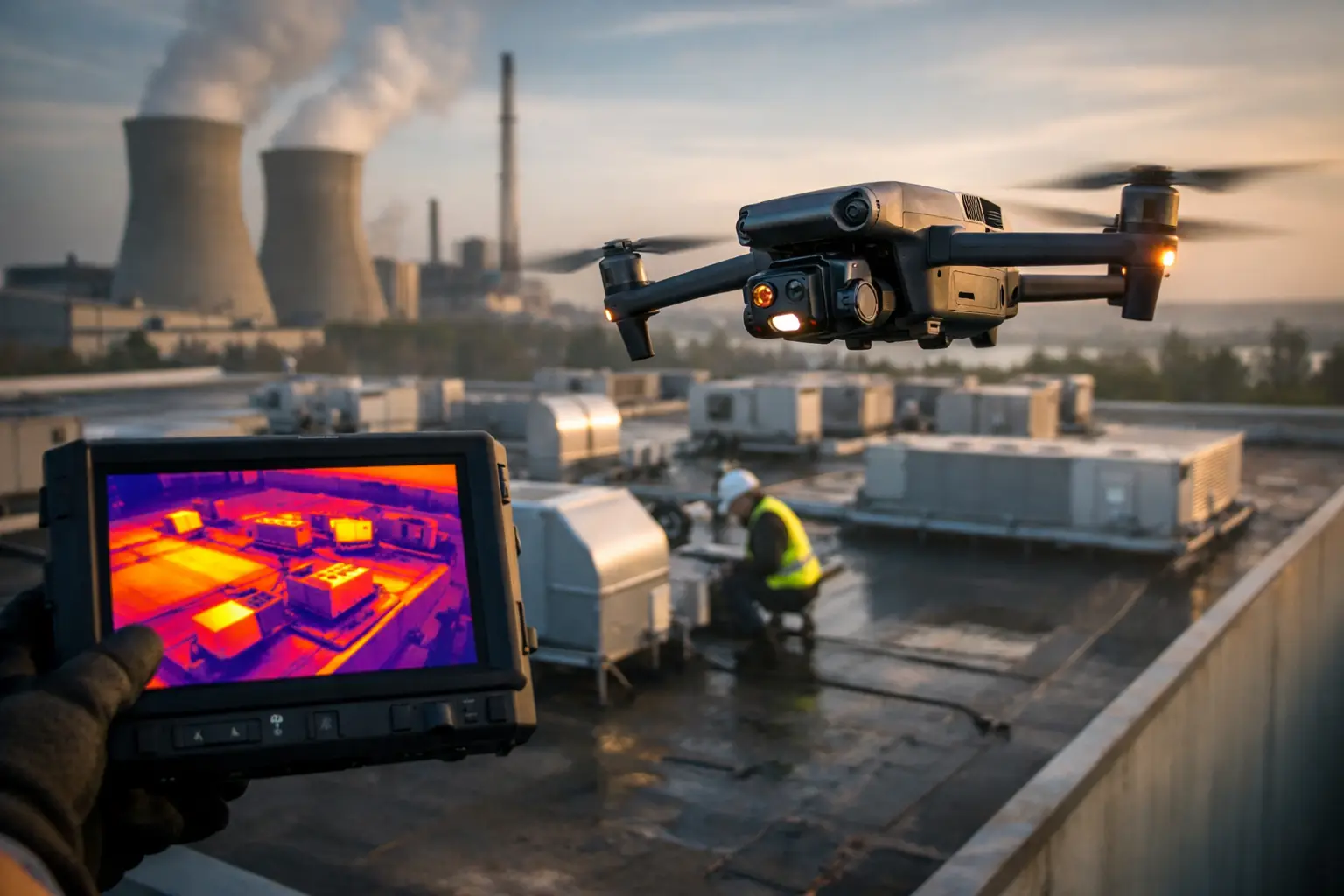
Thermal drone inspections can be valuable on rooftops, but they require realistic expectations. A thermal sensor may help reveal temperature differences associated with trapped moisture, insulation gaps, or heat-producing equipment issues. For large commercial roofs, that can help teams narrow down where closer physical investigation should happen.
But thermal data is sensitive to timing and conditions. Sun loading, recent rain, roof material type, cloud cover, and the time of day can all affect the results. A thermal image is not a structural diagnosis, and it should not be presented that way. It is a decision-support tool that can help maintenance, engineering, or roofing professionals focus their next steps.
For that reason, thermal inspections work best when paired with standard visual imagery and a clear scope. If the mission is leak investigation after a storm, thermal may help. If the mission is documenting membrane punctures around rooftop traffic paths, visual may be the stronger primary method. It depends on the asset and the question being asked.
Common rooftop issues drones can help document
Drone inspections are especially useful for identifying visible roof conditions that are difficult or time-consuming to assess from ladders, lifts, or limited walk access. On commercial and industrial properties, that often includes ponding water, clogged or poorly performing drains, membrane tears, seam separation, damaged flashing, punctures, displaced materials, debris accumulation, and signs of impact after severe weather.
They can also help document conditions around rooftop units, solar arrays, vents, and parapet walls where water intrusion or wear tends to develop. On large facilities, the ability to see the full roof in context matters. Isolated close-ups may show damage, but aerial documentation shows pattern, spread, and relationship to the rest of the system.
That broader perspective is also useful for insurance documentation, contractor coordination, and capital planning. A single defect may call for a patch. Repeated issues across multiple sections may point to a larger maintenance or replacement conversation.
Why drone roof inspections work well for commercial assets
For a small residential roof, traditional access may still be simple enough. For warehouses, manufacturing plants, schools, retail centers, multifamily buildings, data facilities, and industrial sites, the equation changes. The roof area is larger, access is more complicated, and the safety exposure increases quickly.
Drones reduce the need for repeated climbing, limit time spent in elevated work zones, and allow teams to inspect broad roof surfaces faster than many manual methods. They also create a dated visual record that can be reviewed later, compared over time, and shared across departments. That matters when multiple parties are involved in repairs, claims, project oversight, or maintenance planning.
The trade-off is that drones are not a complete replacement for every type of roof inspection. There are times when a hands-on roofing contractor, engineer, or maintenance technician still needs to verify a condition directly. The drone supports that process by making the initial assessment faster, safer, and more informed.
What to expect from a professional rooftop drone inspection
If the inspection is handled professionally, the output should be more than a folder of aerial photos. The deliverables should match the operational need. That may include high-resolution visual imagery, thermal imagery where appropriate, roof maps, labeled issue documentation, and organized reporting that helps internal teams act on what was found.
For commercial and industrial clients, the real benefit is decision-ready information. A facility manager may need condition documentation for a maintenance vendor. A construction team may need verification before turnover. An insurance carrier may need clear visual evidence after wind or hail. An engineering team may need roof imagery that supports a broader asset assessment. The drone mission should be built around those outcomes.
Air Reel Technologies approaches this kind of work with the same priorities that matter to its clients: safety, precision, speed, and disciplined field execution. On large or high-consequence assets, that standard is not optional.
Choosing the right approach for your roof
If you are deciding how to inspect rooftops with drones, start by asking what decision the inspection needs to support. Are you documenting storm damage, evaluating a maintenance concern, tracking recurring water issues, or establishing a baseline condition for a large facility? The answer shapes everything from flight timing to sensor choice to final reporting.
A good drone roof inspection is not about getting dramatic overhead shots. It is about collecting accurate visual data in a way that reduces risk, shortens timelines, and gives your team a clearer view of what needs attention next.
When the roof is large, access is difficult, or the site is operationally sensitive, the smartest move is often the one that gets you reliable information without sending more people into harm’s way.