A shutdown window is booked, a lift is on site, and three people are waiting on access clearance just to photograph one section of an elevated asset. That is usually the moment the real cost of inspection shows up. In the discussion around drone inspection vs manual inspection, the right question is not which method is newer. It is which method gives your team the safest, fastest, and most useful data for the asset in front of you.
For commercial, industrial, and infrastructure operators, the answer is rarely absolute. Manual inspection still has a place. But for many roofs, towers, plant structures, transmission assets, construction sites, and post-loss environments, drone-based inspection support changes the economics and the safety profile of the job.
Drone inspection vs manual inspection: what actually changes?
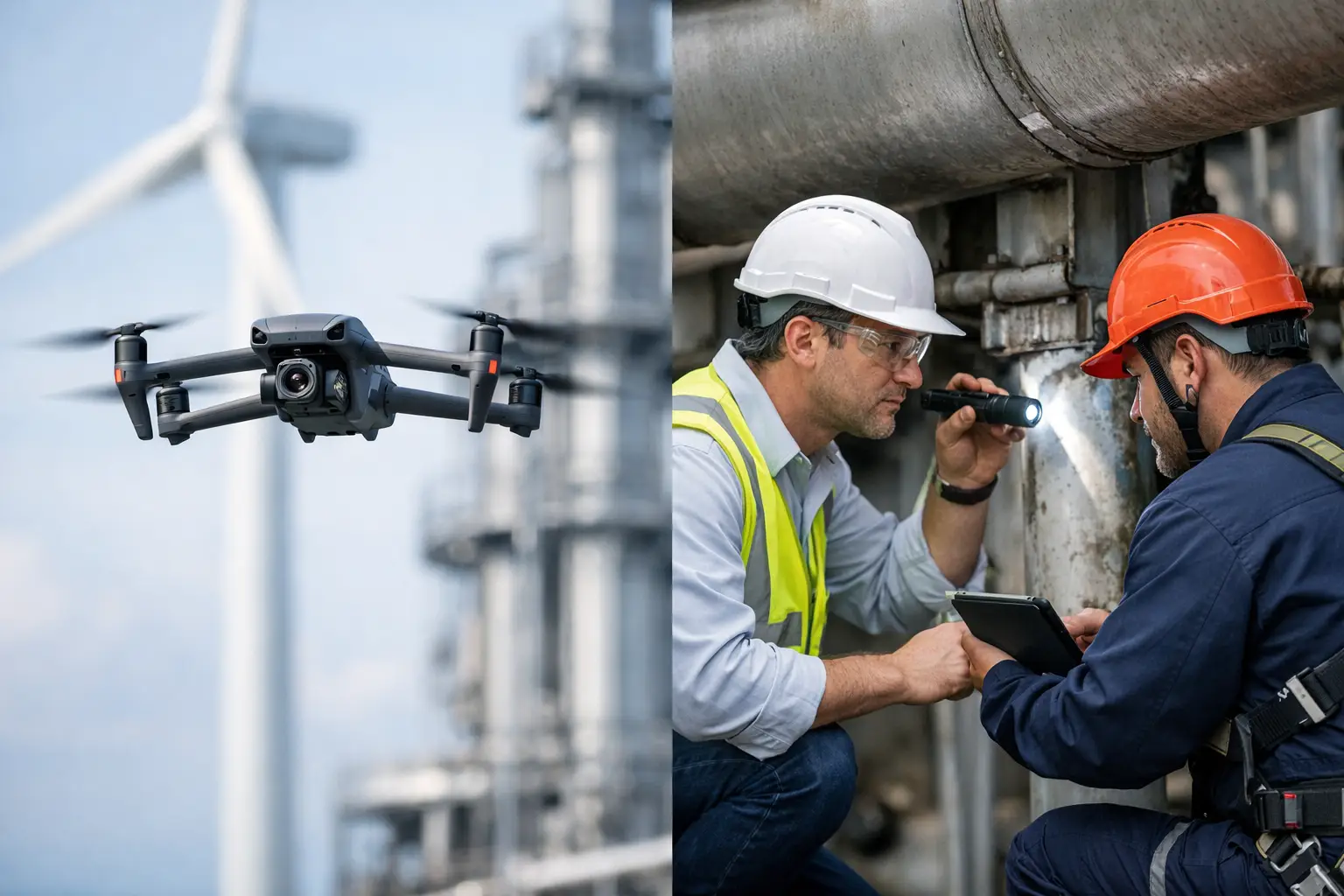
The biggest difference is exposure. Manual inspections often require ladders, lifts, rope access, scaffolding, confined positioning, or shutdown coordination to get eyes on the asset. A drone can often capture the same visual area from a safer stand-off position while reducing the number of people who need to be in harm’s way.
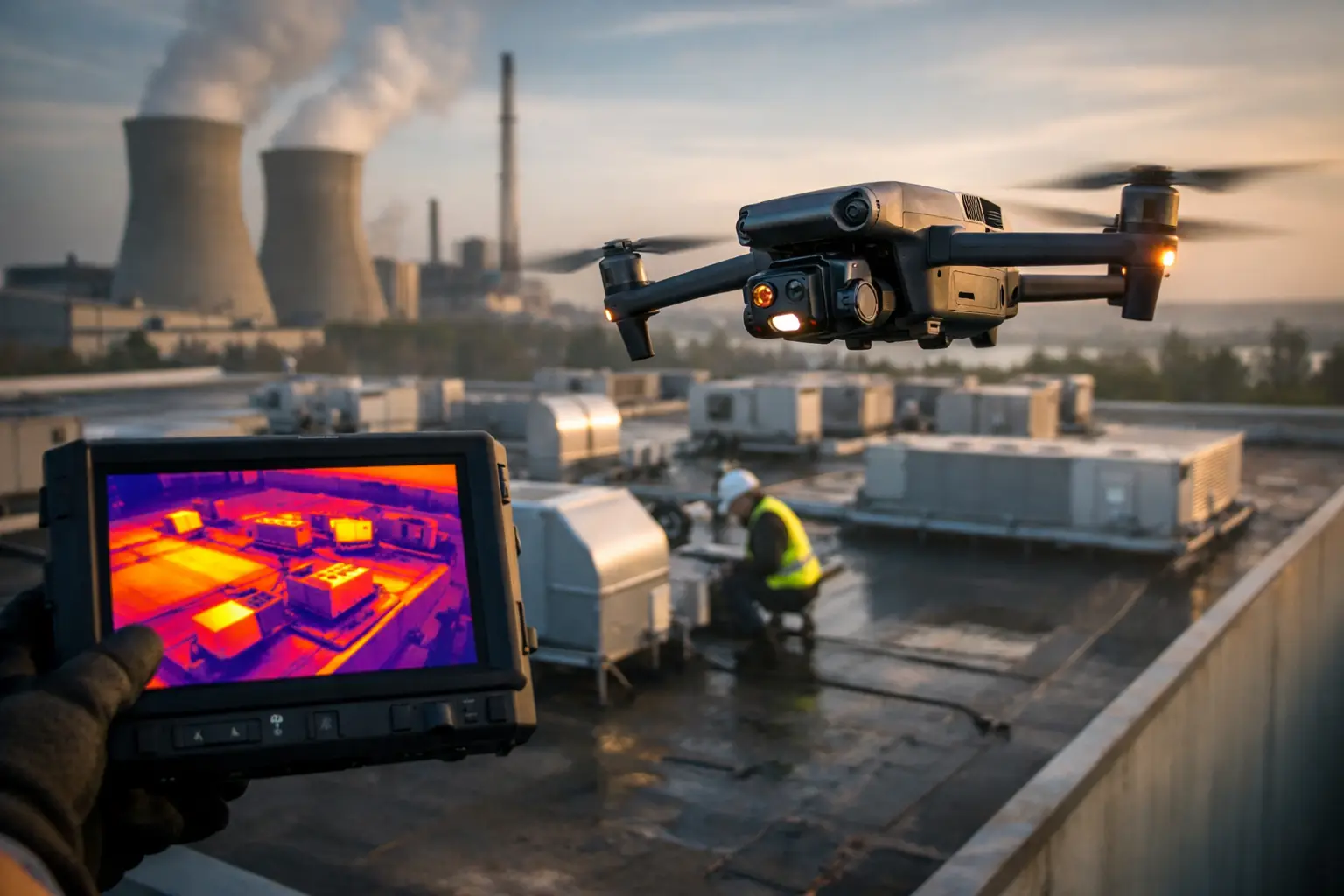
That does not mean a drone replaces a qualified inspector, engineer, or maintenance lead. It means the drone supports their work with high-resolution imagery, thermal data when appropriate, maps, and repeatable visual documentation. In many cases, that is enough to identify areas that need closer review before anyone commits to a more invasive or labor-heavy inspection process.
Speed is the next major shift. Manual methods often involve setup time that exceeds the actual inspection time. If your team is coordinating traffic control, lockout procedures, lift rentals, access escorts, or outage windows, even a straightforward visual inspection can become a half-day or multi-day exercise. A properly planned drone deployment can reduce that timeline substantially, especially for broad-area scans or elevated structures.
Where manual inspection still makes sense
Manual inspection remains necessary when the task requires physical contact, measurements at touchpoint level, nondestructive testing, torque checks, sampling, or internal access beyond what an external aerial view can provide. If a technician needs to tap, probe, test, open, or verify a component directly, there is no substitute for hands-on work.
It also matters in environments with access restrictions, GPS limitations, electromagnetic interference concerns, or operational rules that may narrow where and how a drone can be used. Complex industrial sites require planning, coordination, and a disciplined operator who understands safety and compliance boundaries. In some cases, a drone supports the inspection. In other cases, it only handles part of the scope.
That is why the strongest inspection programs are not built around a false choice. They combine drone-collected visual intelligence with targeted manual follow-up where direct examination is truly required.
Safety is not a side benefit
In a comparison of drone inspection vs manual inspection, safety should be one of the first decision points, not an afterthought. Sending personnel onto steep industrial roofs, up telecom structures, around damaged buildings, or near energized infrastructure increases exposure even when the work is done correctly.
A drone-based workflow can reduce climbs, reduce time at height, and reduce the need to place workers close to unstable or hard-to-reach areas during the initial assessment. That matters for routine inspections, but it matters even more after storms, equipment incidents, or suspected damage events when conditions may be changing.
For decision-makers, lower exposure is not just a safety metric. It affects scheduling, insurance considerations, site disruption, and the number of people tied up in the task. Fewer personnel in hazardous positions usually means a cleaner operation overall.
Cost is more than labor hours
Manual inspection can look familiar on paper, but familiar does not always mean efficient. The visible cost may be the crew. The hidden costs are often equipment rental, access preparation, traffic or site control, production disruption, delayed decisions, and the repeat visit when the first photo set was incomplete.
Drone operations can reduce many of those costs, especially when the goal is to document current conditions, assess broad surface areas, inspect elevated exterior elements, or capture recurring progress records over time. A single flight can often produce a detailed visual record that multiple stakeholders can review later without revisiting the site.
That said, drone work is not automatically the lowest-cost option for every assignment. A simple ground-level check by in-house staff may still be the fastest route for minor issues. The real value appears when access is difficult, risk is high, asset scale is large, or documentation quality matters to several teams at once.
Data quality and repeatability
One of the strongest arguments for drone inspection is not just seeing the asset. It is seeing it in a way that can be documented, shared, compared, and used again. Manual inspections often rely heavily on field notes and limited photo sets taken from whatever positions were accessible at the time.
Drone-collected imagery can give project managers, facility teams, engineers, and insurers a much broader visual record. Depending on scope, that may include close-up imagery, thermal captures, orthomosaic maps, and 3D modeling outputs that support planning and condition review. The benefit is not only detail. It is consistency.
If you inspect the same roof, cooling structure, corridor segment, or construction site every month, repeatable aerial documentation makes trend tracking far easier. You are not relying on memory or different camera angles from different personnel. You have a structured record of change over time.
Drone inspection vs manual inspection for different asset types
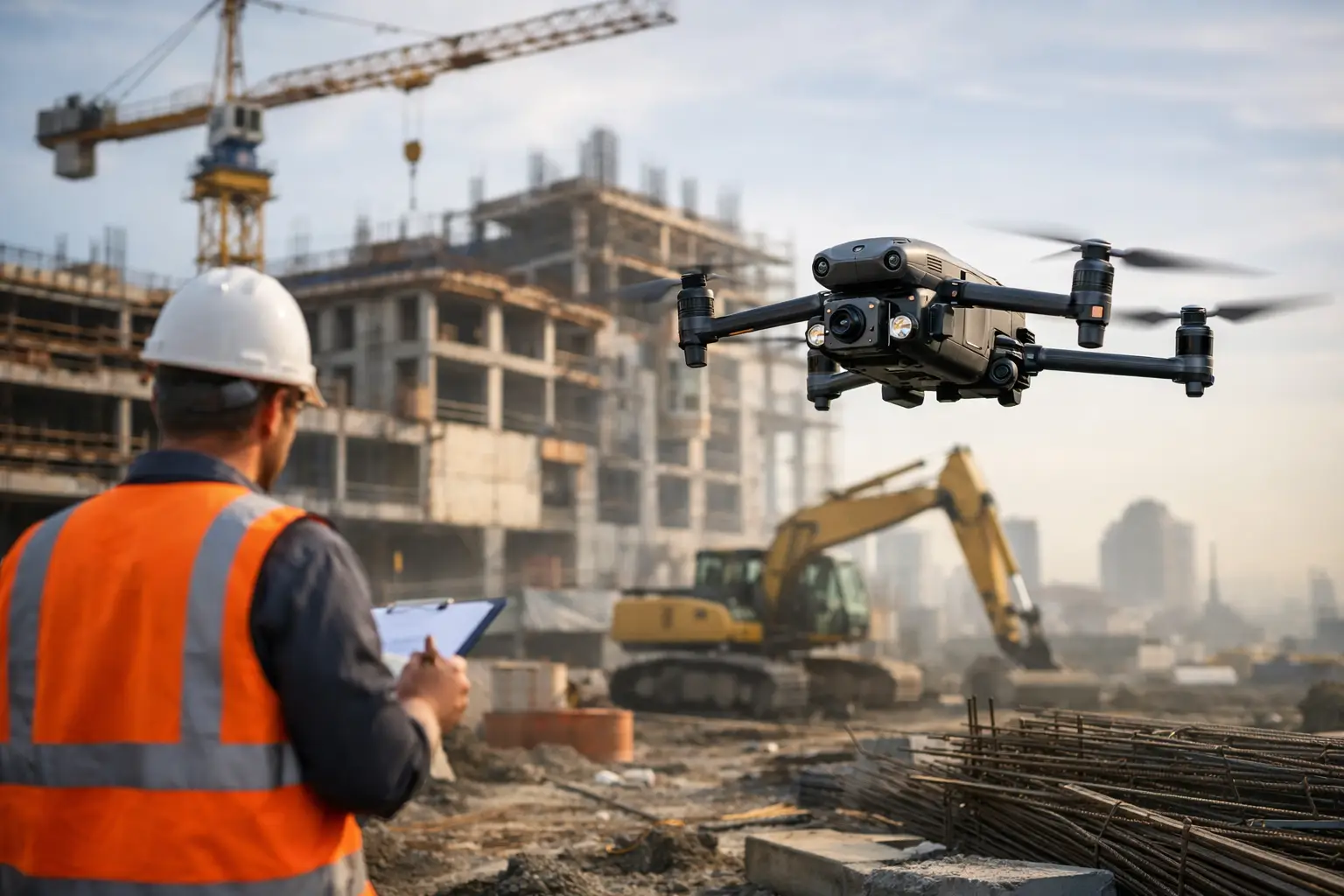
On construction sites, drones are often the better first tool for progress verification, façade observation, roof review, earthwork documentation, and broad site awareness. Manual inspection still plays a role when teams need to verify installed components up close or investigate a specific deficiency.
For cell towers and elevated communications structures, drones can reduce unnecessary climbs during the early review stage and help document visible conditions before a tower crew is mobilized. That can improve planning and help crews arrive with a narrower task list.
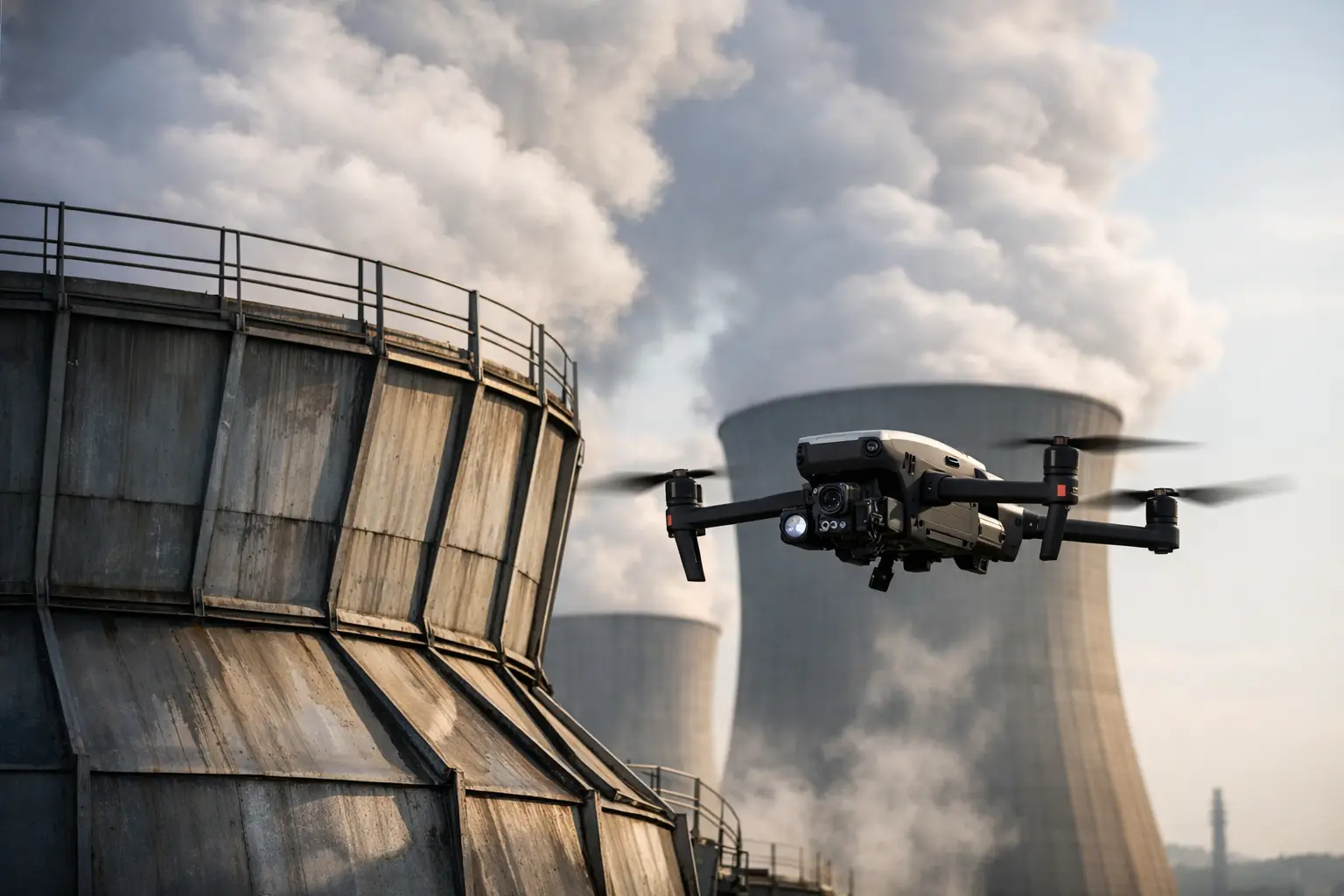
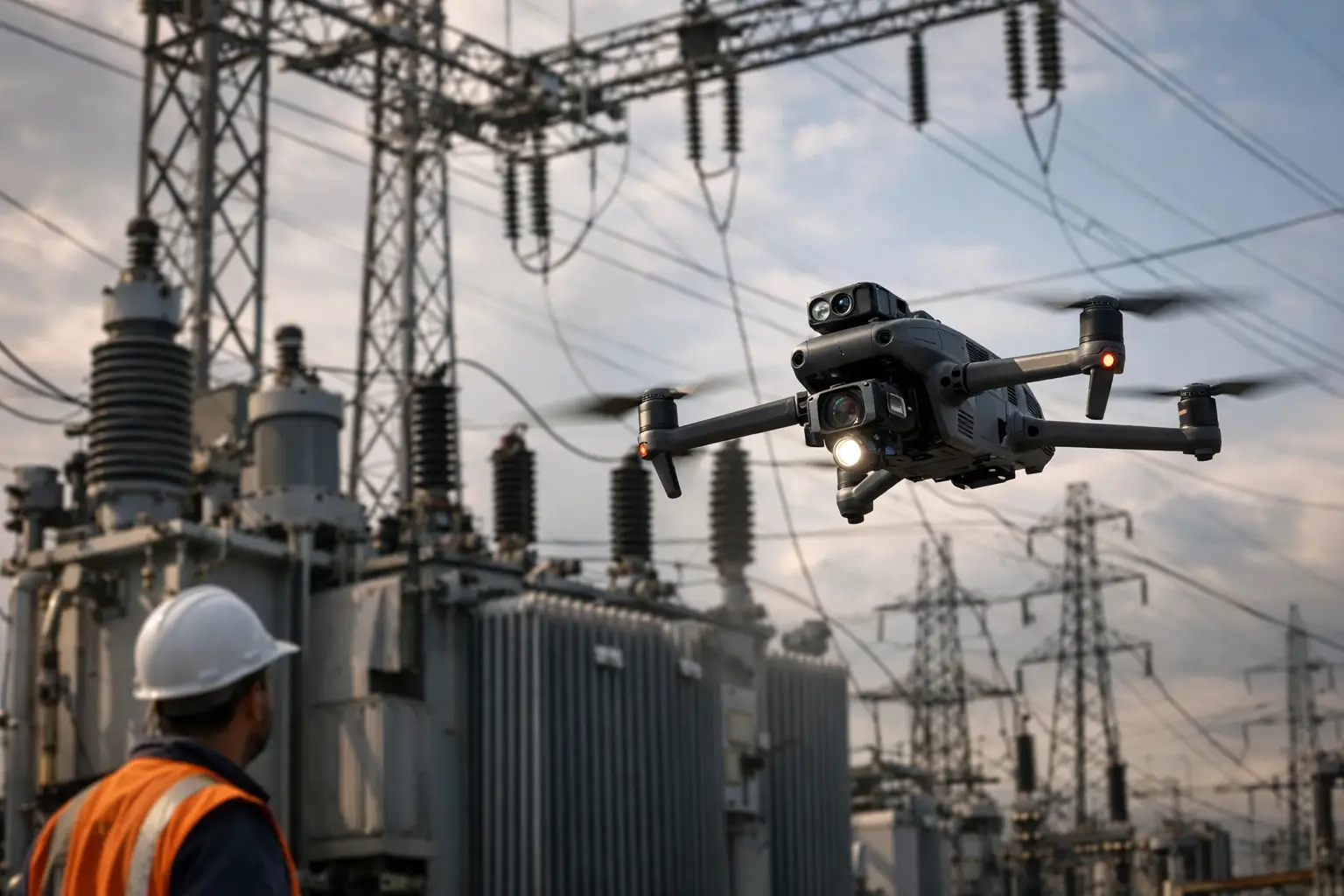
In utilities and energy environments, drones are especially useful for external visual reviews of substations, lines, structures, rooftops, cooling assets, and storm-affected areas where coverage speed matters. Manual methods remain essential when maintenance tasks require direct intervention, instrument testing, or physical confirmation.
For insurance and catastrophe documentation, speed and record quality often matter as much as the inspection itself. Drone imagery can help document widespread damage, difficult roof conditions, and large commercial properties quickly, giving adjusters and property stakeholders a clearer starting point.
What decision-makers should ask before choosing a method
Start with the purpose of the inspection. Are you trying to confirm a suspected issue, create a defensible visual record, screen for problem areas, support a claim, monitor progress, or prepare for a hands-on follow-up? The answer changes the best method.
Then look at access and risk. If personnel need lifts, rope access, shutdown coordination, or exposure to unstable surfaces just to get a first look, drone support is usually worth serious consideration. If the asset can be safely reached from the ground and the task requires physical testing, manual inspection may remain the primary method.
Finally, consider who needs the output. If operations, engineering, project management, and insurance teams all need to review the same conditions, aerial documentation becomes much more valuable. It creates a shared reference point instead of scattered observations.
The best choice is often a phased approach
For many commercial and industrial assets, the most effective model is drone first, manual second if needed. A drone mission captures broad conditions, highlights visible anomalies, and creates inspection documentation without forcing immediate high-exposure access. Then the field team can decide whether a closer manual inspection is necessary and where to focus it.
This approach helps eliminate wasted mobilizations. It can shorten outage windows, reduce unnecessary climbs, and improve communication between stakeholders before anyone commits to more disruptive inspection work. It is a practical way to use the right tool at the right stage.
That is the standard many serious operators are moving toward, particularly in sectors where asset downtime, safety exposure, and documentation quality all carry real financial consequences. Companies like Air Reel Technologies are built around that need – disciplined aerial data collection that supports inspection decisions without overstating what drones can do.
If you are weighing drone inspection vs manual inspection, the smartest move is to stop treating them as rivals. Use drones to reduce risk, speed up visibility, and strengthen documentation. Use manual inspection where direct access and hands-on verification are truly needed. Better inspection programs are rarely about doing more work. They are about putting the right people in the right place only when the asset actually demands it.