A cracked panel five stories up, loose sealant around a window line, staining that suggests moisture intrusion – these are small issues until they are missed. For commercial property teams, engineers, insurers, and construction managers, drone building facade inspection offers a faster way to document exterior conditions without rushing crews onto lifts, scaffolding, or rope access before it makes sense.
That matters most on large structures where access is expensive, schedules are tight, and every additional mobilization adds cost. A drone does not replace an engineer, building envelope consultant, or qualified repair contractor. What it does provide is clear, repeatable visual data that helps those teams see more of the facade, prioritize what needs attention, and make better decisions before committing to more disruptive inspection methods.
Why drone building facade inspection is gaining ground
Traditional facade inspection has always involved trade-offs. Swing stages, boom lifts, and rope access can provide close-up visibility, but they also require planning, site control, qualified personnel, and favorable conditions. On busy commercial sites, that can mean lane closures, tenant disruption, added safety exposure, and delayed reporting.
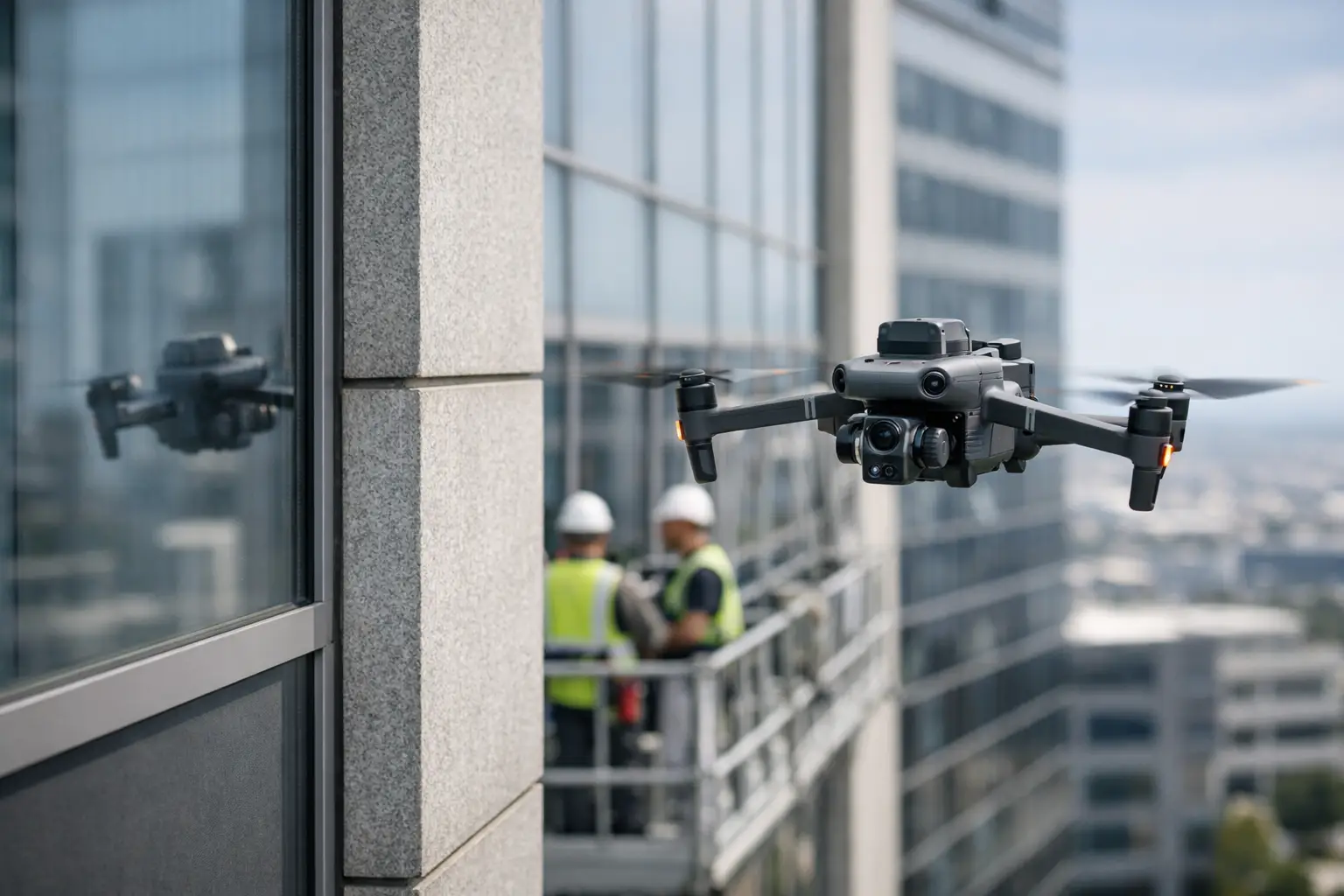
Drone-based inspection changes the first step of that process. Instead of sending people directly into hard-to-reach areas just to establish baseline conditions, a drone team can capture high-resolution imagery across elevations, parapets, joints, corners, balconies, curtain walls, and roof-to-wall transitions. For many properties, that means a broader initial view in less time and with fewer access-related complications.
The value is not just speed. It is also perspective. Exterior building issues often develop in patterns. Sealant failure may repeat across one exposure. Water staining may align with specific penetrations or transitions. Impact damage may cluster after a storm event on the windward side of a structure. Aerial inspection makes those patterns easier to identify because the entire facade can be documented systematically instead of only at isolated touchpoints.
What a drone facade inspection can actually support
The strongest use of drone inspection is practical support for teams that already carry responsibility for the asset. Engineers can use the imagery to guide closer evaluation. Facility managers can use it to plan maintenance scopes. Insurance teams can use it to document storm-related conditions. Construction managers can use it to verify installation progress or identify visible exterior deficiencies before closeout.
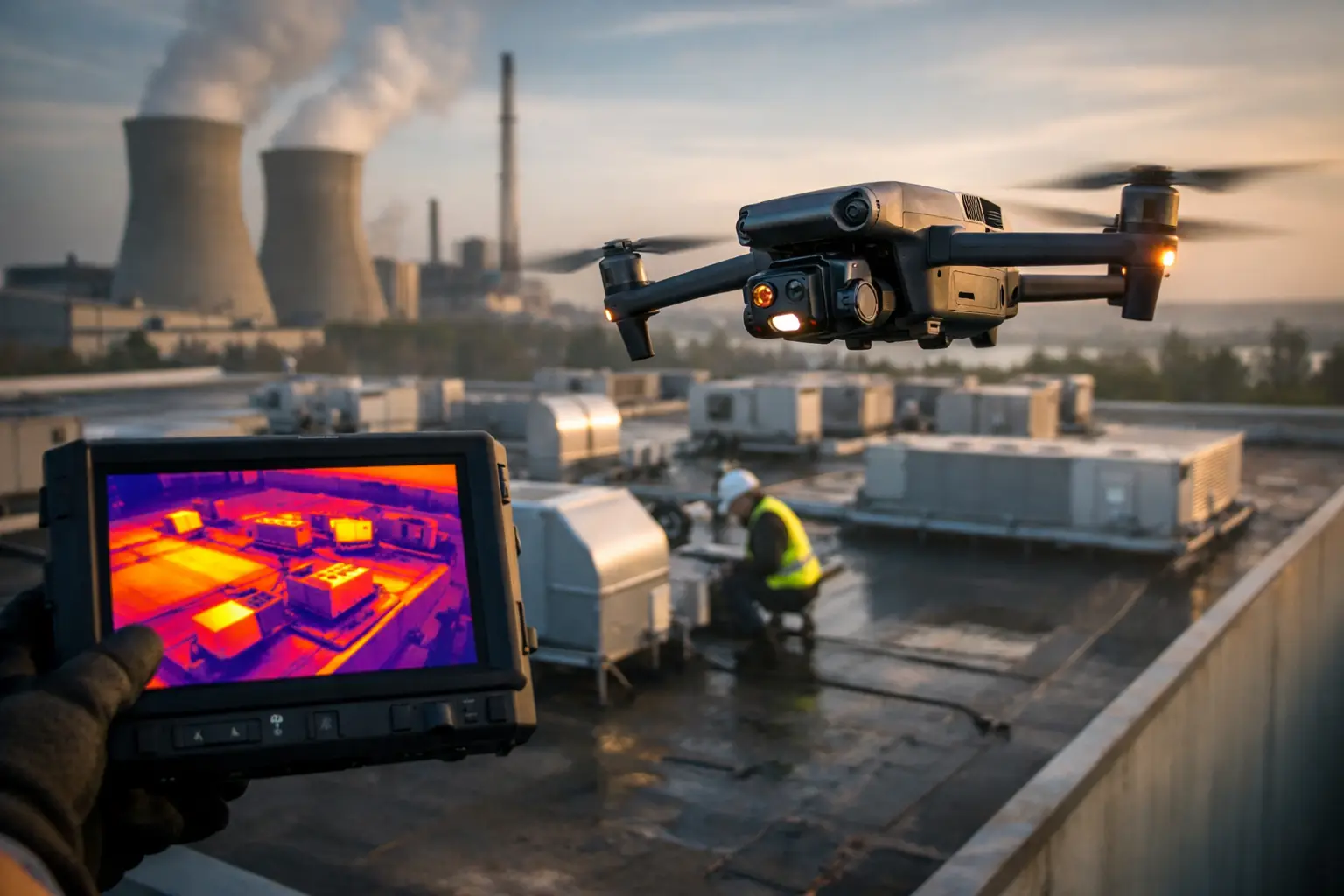
That support role is where the process delivers real business value. A disciplined drone operation can help teams document cracked masonry, displaced facade elements, spalling concrete, failed sealant, damaged cladding, corrosion, water intrusion indicators, flashing issues, and visible roof-edge concerns. On some projects, thermal imaging may also help reveal surface temperature anomalies that warrant closer review, particularly around moisture-related concerns or envelope irregularities. Whether thermal data is useful depends on the building assembly, weather conditions, and inspection objective, so it is not always the right tool.
This is also why the quality of field execution matters. If the mission is only to collect attractive aerial footage, the inspection value is limited. If the mission is planned around elevations, known problem areas, image overlap, close-range detail capture, and organized deliverables, the result becomes usable documentation rather than just visuals.
Where drone building facade inspection works best
Large commercial and institutional properties are often the best fit. Office buildings, distribution centers, hotels, hospitals, schools, multifamily assets, industrial facilities, and mixed-use developments all present exterior access challenges. On these buildings, even a routine exterior review can require significant time and coordination.
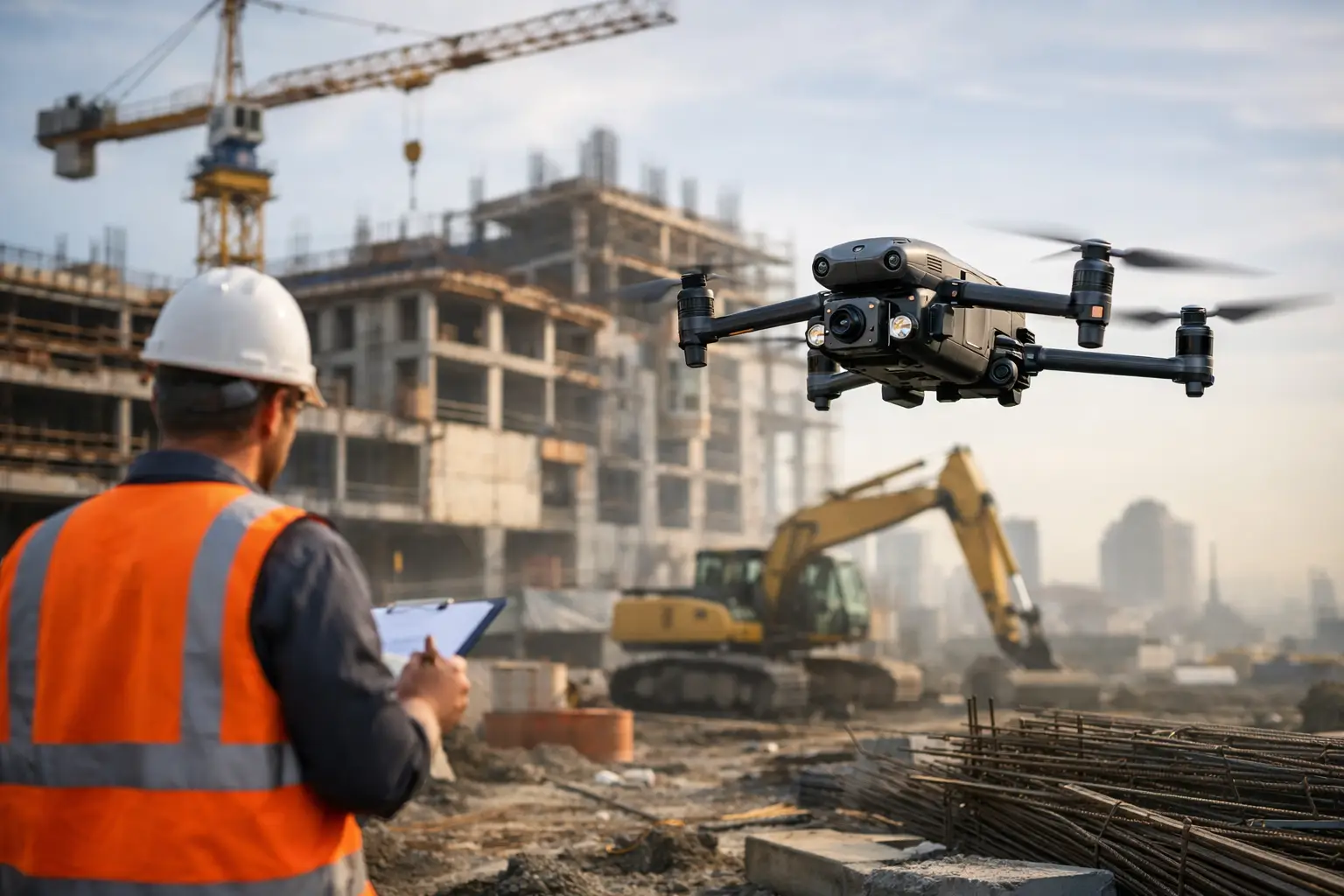
New construction and restoration projects also benefit. A drone can support facade progress documentation, identify visible installation issues, and capture conditions before turnover. For general contractors and project teams, that record can be useful when tracking workmanship, sequencing repairs, or documenting milestone completion.
After storms, the value becomes even clearer. Wind and hail events do not only affect roofs. They can damage facade panels, glazing systems, exterior finishes, coping, screens, louvers, and mounted equipment. A rapid aerial assessment can help determine where more focused inspection or temporary stabilization may be needed first.
There are limits, and those limits should be stated clearly. Dense urban canyons, active pedestrian zones, restricted airspace, reflective glass, poor GPS environments, or severe weather can complicate operations. Some conditions still require hands-on inspection to confirm extent, depth, fastening condition, or concealed damage. Drone inspection is often the smartest first move, not always the final one.
What to look for in the inspection process
A professional facade inspection starts before the aircraft leaves the ground. The operator needs to understand the asset, the site constraints, the surrounding airspace, the mission objective, and the kind of deliverables the client actually needs. A facility manager preparing a maintenance plan may need annotated imagery and elevation-based organization. An insurance team may need event-specific documentation with clear photo references. An engineering firm may need image sets that support a targeted follow-up assessment.
Flight planning should reflect that purpose. A generic orbit around a building rarely provides enough detail for serious inspection use. Effective collection usually involves methodical passes by elevation, angle control for specific facade elements, and attention to transitions where failures commonly appear. Window perimeters, expansion joints, coping edges, facade penetrations, and connections between systems often deserve closer review than broad overview shots alone.
Image quality matters just as much as access. Motion blur, poor exposure, weak file organization, and incomplete coverage reduce the usefulness of the inspection. The best operators think like documentation teams, not camera crews. They capture context shots, close detail, and enough repeatable structure in the data set that a client can compare conditions over time.
Safety, compliance, and why they matter here
Facade work already carries enough risk without adding avoidable problems. Drone operations around buildings require disciplined procedures, especially near occupied properties, active construction sites, roadways, and utility lines. That means proper flight planning, airspace review, site coordination, and pilots who understand how to operate in constrained environments.
For commercial and industrial clients, that professionalism is not optional. FAA Part 107 certification, insurance coverage, and a field-tested approach matter because these projects often involve real exposure – schedule exposure, liability exposure, and operational exposure. A provider should be prepared to coordinate with site teams, follow safety requirements, and work within the realities of active facilities.
This is especially relevant for organizations managing critical infrastructure and high-value assets. They are not looking for casual drone coverage. They need reliable aerial data captured by a team that understands documentation standards, controlled operations, and the importance of not creating new risk while trying to inspect old risk.
The business case is bigger than labor savings
It is easy to focus on reduced lift costs or fewer access hours, and those savings are real. But the stronger case for drone facade inspection is often better decision-making. When teams can see the whole exterior sooner, they can prioritize repairs, narrow the scope for specialty access, document pre-existing conditions, and avoid sending expensive crews to areas that do not need immediate intervention.
That can improve budgeting and planning. Instead of treating the facade as one large unknown, stakeholders can separate cosmetic concerns from urgent issues, isolate problem elevations, and stage work more efficiently. On construction projects, that same visibility can help keep closeout moving by identifying visible punch items before they become last-minute delays.
For insurers and catastrophe-response teams, speed has its own value. A fast, organized exterior record helps support triage when many properties require review at once. It does not replace adjusting, engineering, or coverage analysis, but it can shorten the path to informed next steps.
Choosing the right partner for facade inspection support
Not every drone provider is built for commercial inspection work. Facade inspection requires more than basic flight ability. It calls for controlled execution, consistent image capture, clear documentation, and an understanding of how inspection data fits into engineering, insurance, maintenance, and project workflows.
That is where an experienced B2B drone services partner stands apart. Teams like Air Reel Technologies are built around inspection support, aerial data collection, and disciplined field operations in complex environments. For owners and operators managing commercial, industrial, and infrastructure assets, that experience can make the difference between getting usable documentation and getting a folder full of images that do not answer the real question.
When the facade matters, the first job is not to guess. It is to get a clear view, document conditions properly, and give the people responsible for the asset better information to work from.