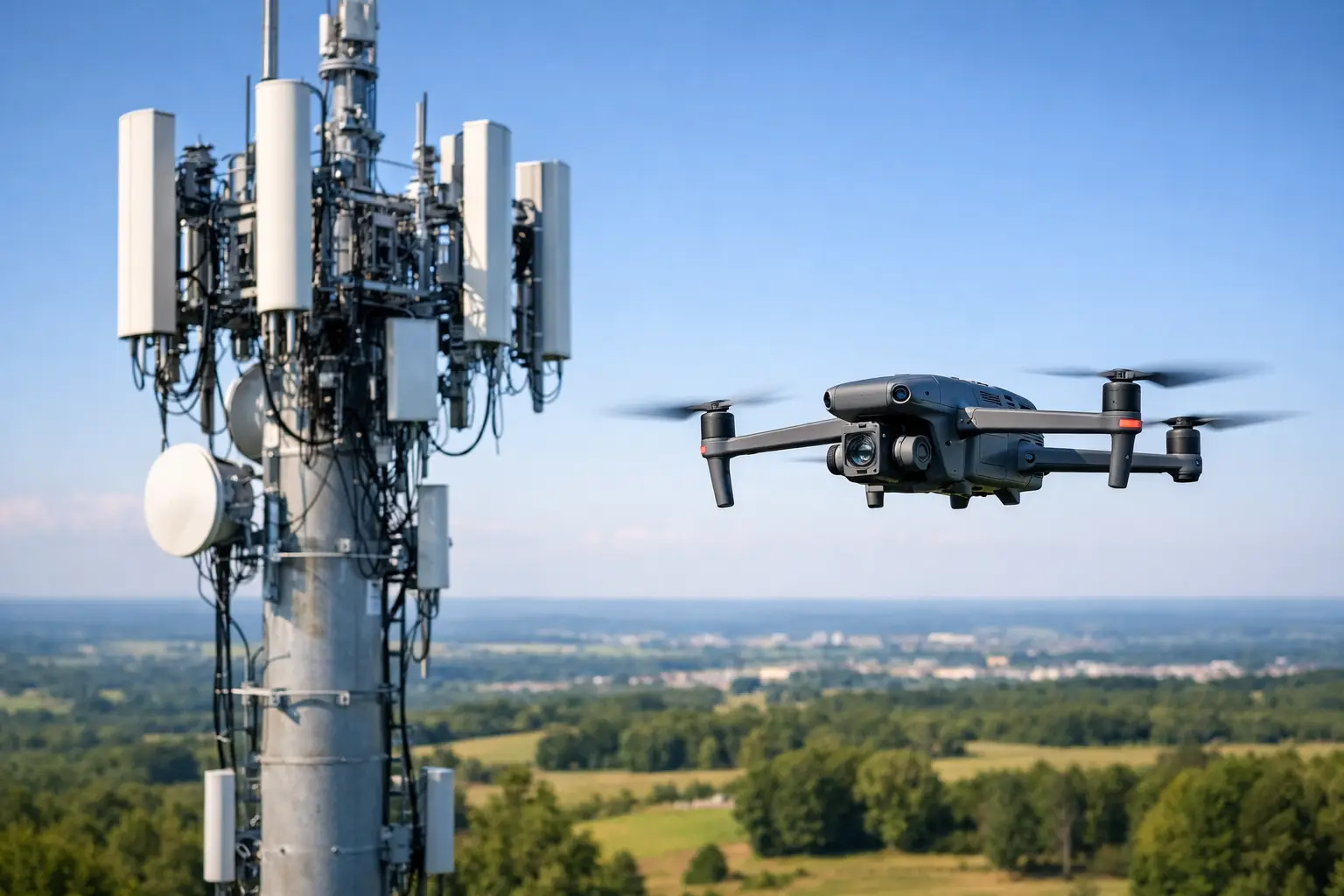
A crew member climbing 200 feet to photograph a loose mount or cracked radome is still common in telecom maintenance. It is also slow, expensive, and exposes teams to unnecessary risk when the first question is often simple: what exactly is happening on the structure? That is where cell tower drone inspection earns its value. It gives tower owners, telecom contractors, and infrastructure teams a faster way to collect clear visual data before they commit crews, equipment, and downtime.
For decision-makers responsible for uptime, safety, and maintenance budgets, the appeal is straightforward. A drone can document antennas, mounts, platforms, cabling, lighting, and visible structural conditions from multiple angles in a fraction of the time required for a manual climb. That does not replace certified tower technicians or engineers when hands-on work or formal evaluation is required. It does give them better information sooner, which leads to smarter dispatch decisions and fewer wasted site visits.
What cell tower drone inspection is really solving
The biggest problem is not just access. It is uncertainty. Many tower issues start with limited visibility from the ground, incomplete photo records, or inconsistent documentation from prior visits. When a maintenance team is trying to determine whether a component shifted after a storm, whether corrosion is advancing, or whether a line needs closer review, poor visuals slow everything down.
A drone-based inspection workflow reduces that uncertainty. High-resolution imagery allows teams to review the asset without immediately sending personnel aloft. For portfolios spread across multiple regions, it also creates a more consistent documentation standard. Instead of relying on a mix of field photos and verbal notes, owners and contractors can work from repeatable aerial imagery captured with inspection in mind.
That matters even more after severe weather, when large numbers of assets may need rapid triage. In those cases, the first priority is often identifying which towers need immediate attention and which can wait. Drone inspection supports that sorting process by delivering visual intelligence quickly, without adding climb exposure at every site.
Where drone inspections fit in the tower maintenance workflow
The most effective use of drone inspection is usually at the front end of a decision. It helps answer whether the issue appears cosmetic, operational, or urgent enough to require a specialized crew. It can also support pre-maintenance planning by showing exact conditions before a truck roll, which helps teams prepare the right personnel and equipment.
For routine asset management, drones are useful for baseline documentation. A clear visual record of the tower, mounted equipment, and surrounding access conditions makes future comparisons easier. If something changes after a storm event, upgrade project, or tenant activity, teams have a reference point instead of relying on memory or scattered file folders.
Drone inspection also supports project documentation. During equipment upgrades, decommissioning work, or lease-related changes, aerial imagery can help document before-and-after conditions in a way that is easier to review across operations, engineering, and client teams.
What a professional cell tower drone inspection can capture
A professional inspection flight is not about cinematic footage. It is about collecting usable data. That usually starts with close visual imagery of antennas, coax or fiber runs, mounts, brackets, platforms, safety climb systems, obstruction lighting components, and visible structural elements that can be documented safely from the air.
Depending on the assignment, the deliverables may include high-resolution stills, annotated imagery, wide-context photos showing tower orientation and access, and organized inspection documentation that can be reviewed by telecom managers, maintenance coordinators, engineers, or insurers. In some cases, thermal imaging may be useful for supporting specific equipment assessments, although its value depends on the site, the component, and the inspection objective.
The key is not collecting more footage. It is collecting the right imagery in a format the client can actually use for maintenance planning, claims support, condition tracking, or contractor coordination.
The safety and cost advantages are real, but they are not automatic
Drone inspection can reduce climb exposure, shorten time on site, and lower the number of unnecessary dispatches. Those benefits are meaningful, especially for organizations managing large tower counts or responding to multiple incidents across a region.
Still, results depend on how the work is planned and executed. Cell towers are not simple flight environments. There may be active equipment, tight approach paths, restricted site conditions, changing weather, nearby lines, and airspace considerations. A provider needs more than flight skill. They need disciplined field procedures, regulatory awareness, and a clear understanding of how to operate around critical infrastructure without creating new problems.
That is one reason serious infrastructure clients tend to look for FAA Part 107-certified operators with commercial insurance coverage and experience in industrial inspection environments. The value is not just in getting the drone into the air. It is in collecting reliable data while protecting the site, the schedule, and the people involved.
What to look for in a drone inspection partner
If you are hiring for cell tower inspection support, the first question should be operational: can this team work like a professional field contractor, not just a drone operator? Tower sites often involve coordination with property access, maintenance schedules, safety controls, and client reporting requirements. The provider should be comfortable working within that structure.
Image quality matters, but so does documentation discipline. Files should be organized, views should be intentional, and the inspection should align with the client’s actual use case. A maintenance manager may need close-up visuals of specific mounted components. An engineering team may need broader documentation for condition review. An insurance stakeholder may need time-stamped records that show the extent and location of visible damage. The best providers ask those questions before the flight, not after.
It also helps to work with a company that understands industrial and infrastructure environments more broadly. Cell towers are rarely managed in isolation from larger operational concerns. The same client may also oversee substations, rooftops, pipelines, or construction sites. A provider with broader infrastructure experience is often better equipped to meet documentation standards and communicate with technical stakeholders.
Limits matter, and good providers are clear about them
A drone can capture excellent visual data, but it does not certify a tower or replace a qualified structural evaluation. If a site shows signs of significant distress, active equipment issues, or conditions requiring direct contact inspection, the drone imagery should support the next step, not pretend to be the final word.
That clarity matters because it protects everyone involved. Operations teams get faster visibility. Engineers and tower technicians get better information before they mobilize. Asset owners get cleaner records for maintenance and claims. But the inspection remains what it should be: a high-value documentation and decision-support tool.
Weather, signal interference, airspace restrictions, and site layout can also affect what is practical. A professional provider should be upfront about those constraints and build the flight plan around them. If a safer or more useful outcome requires adjusting the scope, rescheduling, or coordinating more closely with the site team, that is a sign of professionalism, not hesitation.
Why this approach is gaining ground
Telecom infrastructure teams are under pressure to move faster without creating more risk. They need better visibility across distributed assets, especially when maintenance backlogs, storm response, and capital projects all compete for time and budget. Drone inspection fits that reality because it improves the quality and speed of field documentation.
For operators across Georgia, Alabama, South Carolina, and Tennessee, that can be especially useful after severe weather or when assets are spread across difficult travel routes. A disciplined drone services partner can help reduce delay between identifying a concern and seeing the condition clearly enough to act.
Air Reel Technologies approaches this work the same way critical infrastructure clients expect any field operation to be handled – with preparation, compliance, insurance-backed professionalism, and a focus on usable deliverables. That matters when the asset is important, the schedule is tight, and guesswork is expensive.
The practical advantage of cell tower drone inspection is simple: better visibility earlier in the process. When you can see the asset clearly, you can make better decisions about safety, maintenance, crew deployment, and documentation before small issues become costly ones.