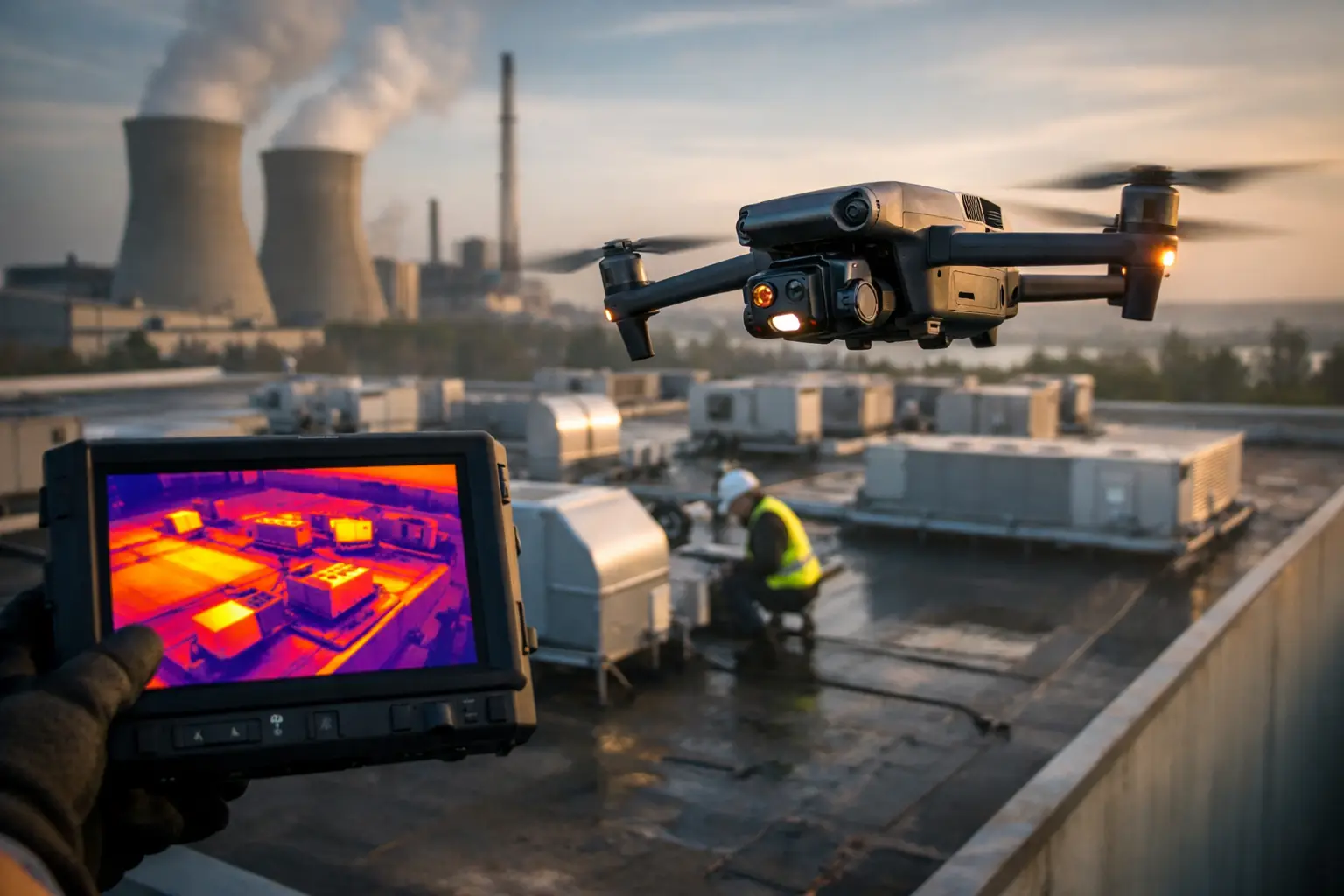
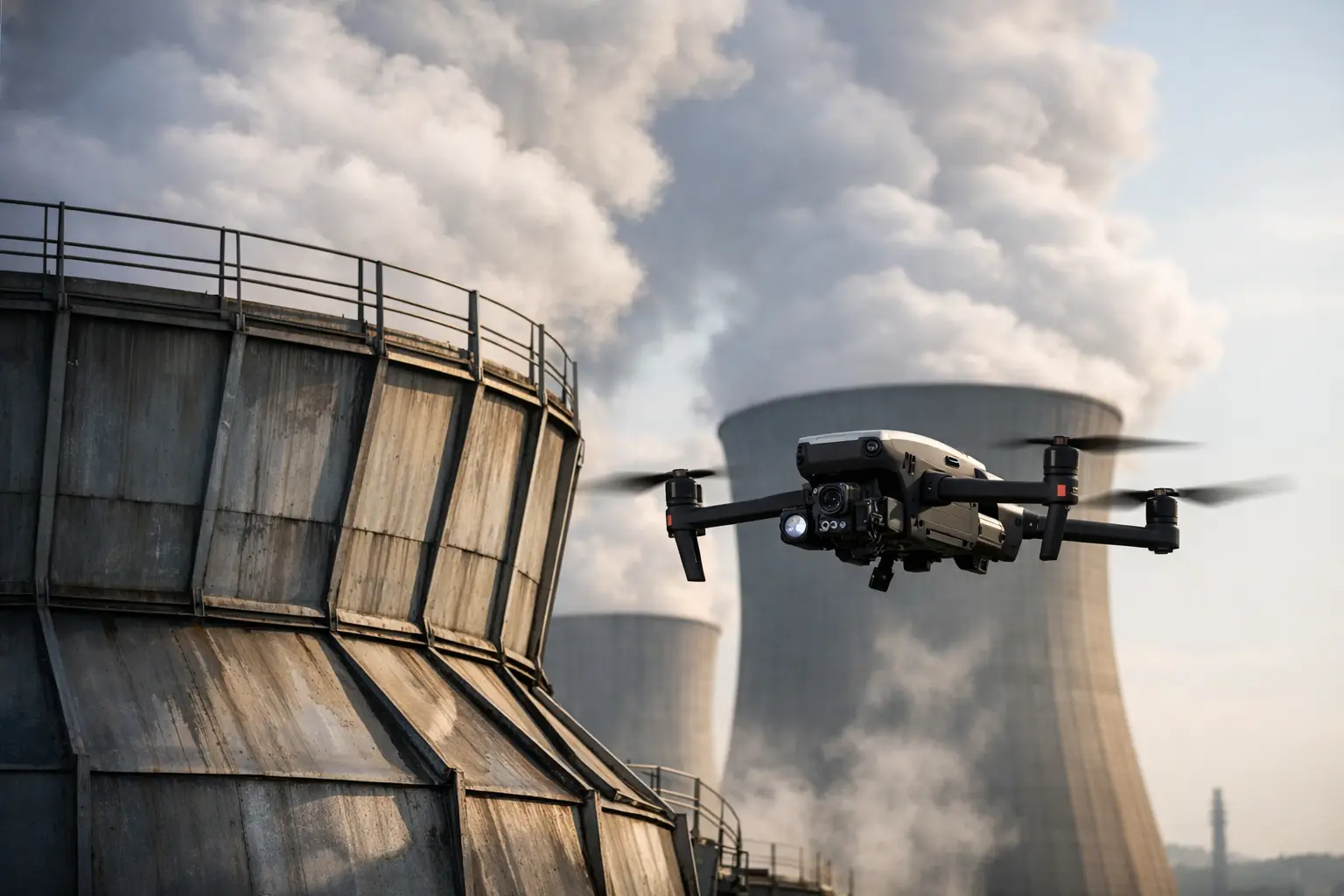
Cooling tower issues rarely begin as dramatic failures. They often start as a small area of failed coating, a loose louver, a blocked fill section, a wet seam, or an abnormal heat pattern that is difficult to see from the ground. Knowing how to inspect cooling towers means building a repeatable process that identifies those conditions before they affect capacity, water use, safety, or planned maintenance budgets.
For facility managers, plant operators, engineering teams, and asset owners, the goal is not simply to collect photos. A useful inspection creates organized visual evidence of the tower’s exterior, accessible internal components, operating condition, and areas that may require closer engineering review. The right approach also reduces the need to place personnel on elevated, slippery, or difficult-to-access surfaces just to establish what is happening.
Start With Inspection Scope and Site Conditions
A cooling tower inspection should begin before anyone approaches the structure. Define why the inspection is taking place: routine condition documentation, pre-maintenance planning, post-storm assessment, warranty support, insurance documentation, or investigation of a known operating concern. The purpose determines the required level of detail, the access plan, and whether visible-spectrum imagery, thermal data, measurements, or a 3D model will add value.
Review available records first. Previous inspection reports, repair histories, drawings, known leak locations, maintenance logs, water-treatment records, and recent weather events can focus the field effort. If a tower has experienced high winds, hail, freeze conditions, or debris impact, compare current conditions against prior imagery where possible.
Site conditions matter as much as the inspection checklist. Confirm operating status, active fan locations, exhaust plumes, restricted areas, nearby power lines, access routes, fall-protection requirements, and facility-specific safety procedures. For aerial work, the flight team should coordinate with site operations, identify safe launch and recovery locations, and account for wind, moisture, electromagnetic interference, and airspace requirements. An FAA Part 107-certified pilot is one part of a disciplined operation, not a substitute for facility coordination.
How to Inspect Cooling Towers Systematically
A systematic inspection works from the overall asset to individual components. This prevents gaps in coverage and makes it easier to compare one inspection cycle with the next. Establish a consistent naming convention for tower cells, elevations, faces, fan bays, basins, and mechanical areas before imagery is captured.
Document the exterior envelope first
Begin with a wide visual record of each side of the tower. Capture the structure from multiple elevations and angles so the inspection team can identify broad patterns such as staining, corrosion, algae growth, coating failure, cracked concrete, panel misalignment, or localized deterioration.
For field-erected concrete towers, pay close attention to shell surfaces, expansion joints, cold joints, access openings, ladders, platforms, handrails, and visible cracking or spalling. For packaged or modular towers, examine casing panels, structural framing, fasteners, louvers, fan stacks, doors, seams, and support members. Water staining may indicate a leak, but it can also result from normal drift or overflow. Documentation should distinguish observed conditions from unverified causes.
High-resolution aerial imagery is especially useful on tall structures and upper elevations that are difficult to view from grade. It can reduce unnecessary climbing and give engineers or maintenance planners a clear basis for determining where hands-on access is actually needed.
Check air movement and heat-rejection components
Cooling performance depends on free airflow and the condition of the components that move and distribute air and water. Inspect visible louvers for cracks, missing sections, warping, debris accumulation, and blocked air paths. Damaged louvers can affect airflow, increase drift, and allow debris into the tower.
Document fan stacks, fan guards, fan blades, hubs, drive assemblies, gearboxes, motors, belts, and vibration-related wear where visible and safely accessible. Look for blade damage, loose hardware, oil staining, corrosion, abnormal movement, damaged guards, and obstructions. Aerial inspections can capture elevated fan-stack conditions without relying on distant ground-level observations, but moving equipment requires conservative standoff distances and coordination with operations.
Thermal imagery may help identify temperature differences across cells, hot bearings, motor anomalies, or uneven thermal conditions at accessible external surfaces. Its value depends on the asset, the operating load, ambient weather, surface emissivity, and viewing angle. Thermal data should be collected by trained personnel and interpreted as screening information, not as a standalone diagnosis.
Inspect water-distribution and fill areas
Where access and operating conditions allow, inspect hot-water basins, distribution piping, nozzles, spray patterns, fill media, drift eliminators, and cold-water basins. Common concerns include plugged nozzles, uneven water distribution, scale, biological growth, damaged fill, displaced drift eliminators, and debris accumulation.
Uneven spray patterns can contribute to localized performance loss and premature component wear. Missing or damaged fill can reduce heat transfer, while clogged fill may restrict airflow. Capture clear, repeatable imagery of representative areas as well as all visibly damaged sections. If the tower must be shut down or isolated for safe access, schedule that work with operations rather than trying to force complete coverage during an active run.
At the cold-water basin, inspect for visible sediment, standing debris, corrosion, damaged coatings, leaks, cracks, and condition of screens or strainers. Confirm whether overflow, make-up water, bleed-off, and drainage components show visible signs of leakage or deterioration. Water chemistry and biological control are outside the scope of a visual aerial inspection, but field observations can help the maintenance team decide where additional testing is warranted.
Examine structural supports and access systems
A cooling tower’s support steel, concrete foundation, anchor points, access stairs, ladders, platforms, and railings deserve the same documentation discipline as the heat-rejection components. Look for corrosion, damaged grating, loose connections, bent members, deteriorated concrete, missing fasteners, and unsafe access conditions.
This is an area where aerial data can provide meaningful safety value. Instead of sending personnel up a ladder solely to locate visible corrosion near an upper platform, a drone-supported inspection can document the condition first and help prioritize hands-on verification. It does not eliminate the need for qualified structural or mechanical professionals when defects are suspected. It makes their follow-up work more targeted.
Use Aerial Data to Improve, Not Complicate, the Workflow
The best cooling tower inspections do not generate thousands of unorganized images. They produce a clear record that maintenance, engineering, operations, and insurance teams can use. Aerial capture should follow a planned flight path and image sequence, with consistent overlap, controlled distance from the structure, and identifying labels for each tower face or cell.
Depending on the objective, deliverables may include high-resolution exterior imagery, annotated condition photos, thermal images, orthomosaic maps of the surrounding area, or a 3D model that helps teams understand component locations and access constraints. A 3D model is useful for maintenance planning and communicating conditions across teams, but it is not always necessary. For a focused post-storm review, a structured photo report may provide faster and more practical value.
Data quality depends on the field plan. Moisture on lenses, glare from wet surfaces, drifting vapor, low light, and airflow around fan stacks can reduce image clarity. Schedule capture conditions carefully, repeat critical shots when needed, and record limitations in the final documentation. Accurate reporting includes what could not be clearly observed, not just what was found.
Turn Findings Into Maintenance Priorities
Inspection findings should be organized by location, observed condition, apparent severity, and recommended next action. Avoid vague labels such as “needs attention.” A useful note identifies the component, describes the visible condition, and states whether the issue calls for monitoring, maintenance planning, prompt repair, or engineering evaluation.
For example, “corrosion visible on upper east platform guardrail connection” gives a maintenance team a location and condition to verify. “Thermal variation observed across Cell 2 during operating inspection” gives operations a defined reason to review loading, water distribution, or mechanical performance. The inspection provider should not make structural certification claims from imagery alone, but well-organized data helps qualified teams make faster decisions.
Keep inspection records consistent across cycles. Repeatable views taken from similar positions make changes easier to identify over time. This is particularly useful for large industrial facilities with multiple cells, aging assets, or limited shutdown windows. A baseline aerial inspection can become a practical reference point for future repairs, contractor coordination, and claims documentation.
Plan the Next Inspection Before Leaving the Site
Inspection frequency depends on tower type, operating duty, environment, water quality, maintenance history, and the consequences of unplanned downtime. A tower exposed to coastal air, industrial contaminants, heavy debris, or frequent severe weather may need closer observation than a protected asset with a stable maintenance record.
Before closing the work order, identify the next action owner and timeframe for every material finding. Air Reel Technologies supports industrial teams with organized aerial imagery, thermal data, mapping, and inspection documentation that can reduce access exposure and improve maintenance planning. The most valuable inspection is the one that gives the right people enough reliable information to act before a small, visible issue becomes an operational problem.