When a roof loss, plant incident, tower issue, or storm event puts pressure on a claims team, the question usually is not whether drones are useful. It is whether are drone inspections insurance compliant in a way that stands up to carrier expectations, documentation standards, and field risk controls. For commercial and industrial stakeholders, that answer is often yes – but only when the operation, pilot, and deliverables are handled correctly.
Are drone inspections insurance compliant in practice?
In practical terms, drone inspections can absolutely fit insurance workflows. Carriers, adjusters, engineers, and risk teams already use drone-collected imagery, thermal data, orthomosaics, and site documentation to support claims review, catastrophe response, underwriting, and condition assessment. The value is clear. Drones can document difficult-to-access assets quickly, reduce ladder and lift exposure, and capture a visual record that is easier to share across teams.
But compliance is not automatic. Insurance compliance is not a single box to check. It usually means the drone operation aligns with aviation rules, site safety requirements, privacy expectations, client documentation standards, and the insurer’s own internal workflow. A legal flight is not always the same thing as an insurance-ready inspection package.
That distinction matters most on large commercial roofs, industrial facilities, utilities, telecom structures, and catastrophe sites. These environments involve more than getting images from the air. They require disciplined planning, controlled field execution, and documentation that decision-makers can actually use.
What insurance teams usually mean by compliance
When insurance professionals ask whether drone inspections are compliant, they are usually asking several questions at once.
First, was the flight performed legally? In the United States, that starts with FAA Part 107 compliance, airspace review, pilot certification, and any required operational approvals. If the operator cannot demonstrate that foundation, the rest of the inspection package becomes harder to trust.
Second, was the operator properly insured and operating under professional standards? This is especially important in commercial and industrial environments where site risk is high and the assets are valuable. A carrier or asset owner wants to know that the drone provider is not improvising in the field.
Third, does the output support the claim, underwriting file, or loss documentation process? An insurance-compliant inspection is not just sharp imagery. It is organized visual evidence, location-aware documentation, date-stamped records, and a clear chain from capture to reporting.
Finally, was the inspection performed within the right scope? Drone data can support adjusters, engineers, facility teams, and underwriters. It should not be presented as a structural certification or a substitute for licensed engineering judgment. That line matters.
The compliance factors that actually matter
The fastest way to lose confidence in drone inspection data is to treat it like general aerial photography. Insurance-related work demands more discipline.
FAA compliance is the starting point. The remote pilot should hold a current Part 107 certificate, understand controlled airspace requirements, and operate under the applicable flight rules for the assignment. On some sites, especially around sensitive industrial or utility assets, operational planning can be as important as the flight itself.
Operator insurance matters too. A professional drone services provider should carry appropriate insurance coverage and be prepared to work within client vendor requirements. For insurance carriers and large asset owners, that is not a formality. It is part of basic risk management.
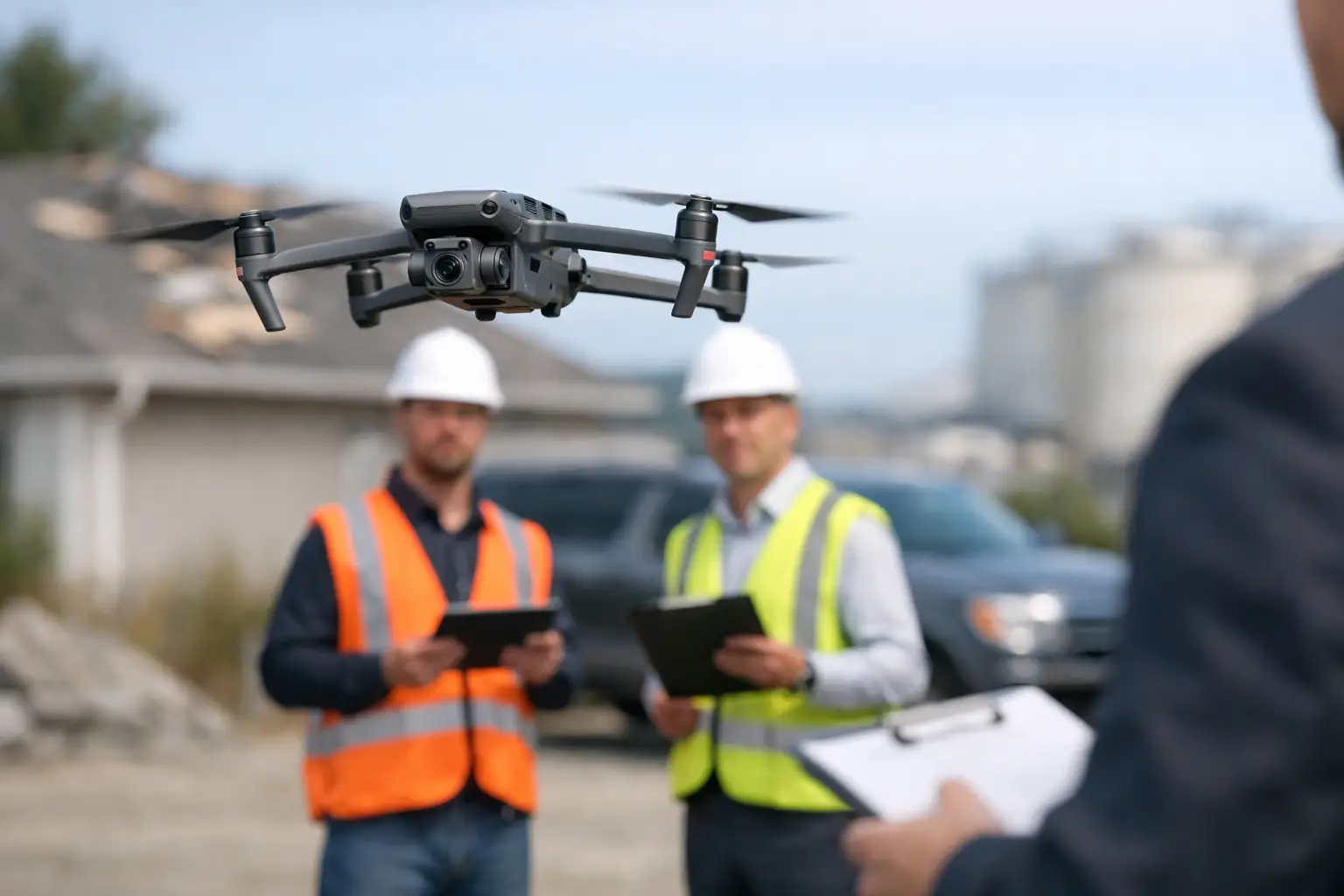
Site safety is another major factor. A compliant drone inspection should fit into the broader jobsite or facility safety plan. That may include site briefings, restricted areas, spotter use, coordination with facility personnel, and weather-based go or no-go decisions. On active construction sites, substations, industrial rooftops, or post-storm environments, field control separates professional work from unnecessary risk.
Data handling also deserves attention. Images and thermal files need to be captured, stored, labeled, and delivered in a way that supports the claim or inspection record. If files are incomplete, poorly organized, or disconnected from the asset location and date of loss, they create friction instead of clarity.
Where drone inspections fit well in insurance workflows
Drone inspections tend to be highly compliant and highly useful when the task is visual documentation, condition support, or access to hazardous areas. Roof inspections after hail or wind events are an obvious example. Drones can document membrane damage, punctures, flashing conditions, ponding patterns, and surrounding site impacts without adding immediate fall exposure.
They also fit well in catastrophe response. After a major storm, claims teams often need fast documentation across multiple locations. Drones help gather consistent visual records when roads are partially blocked, access is limited, or adjuster resources are stretched thin.
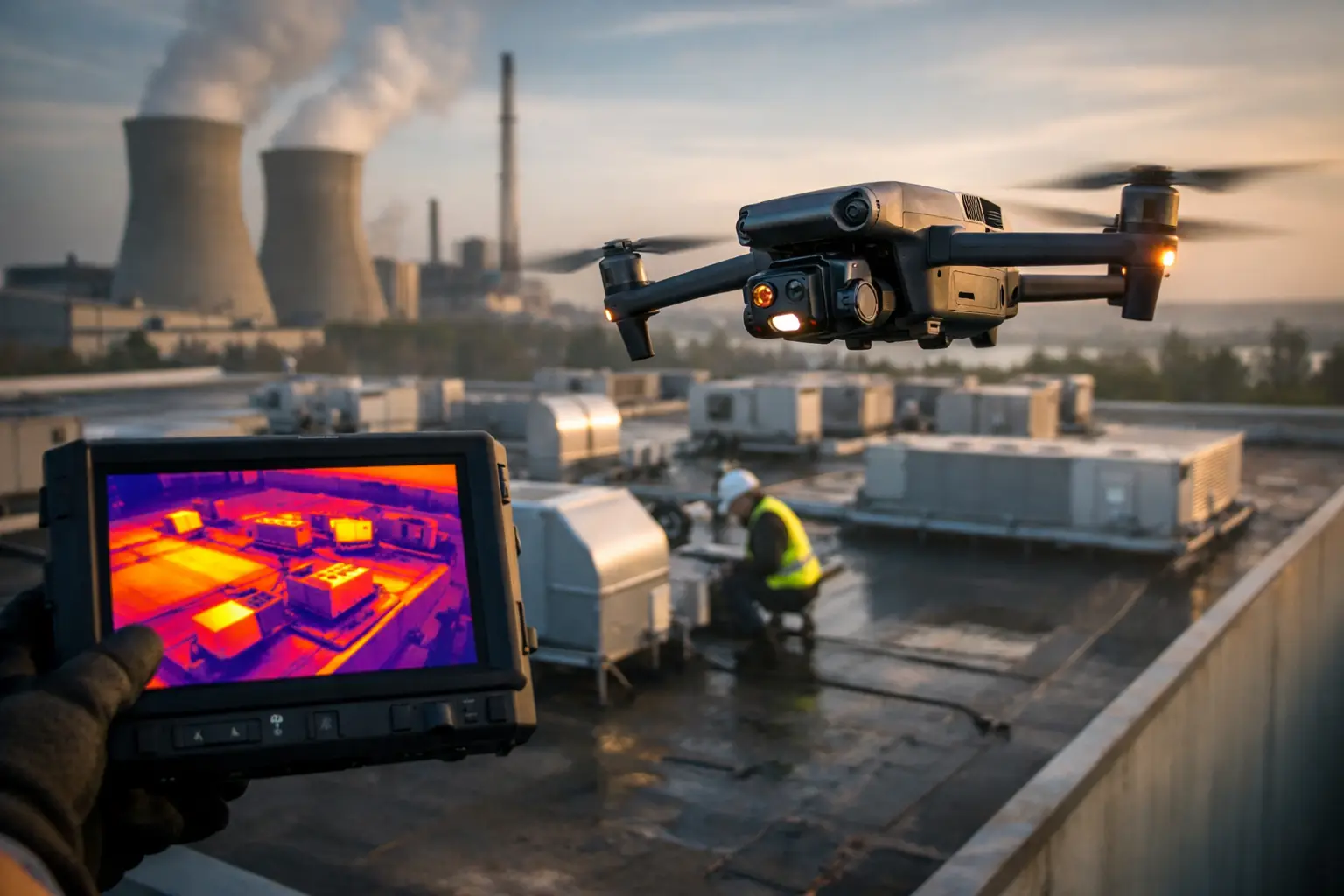
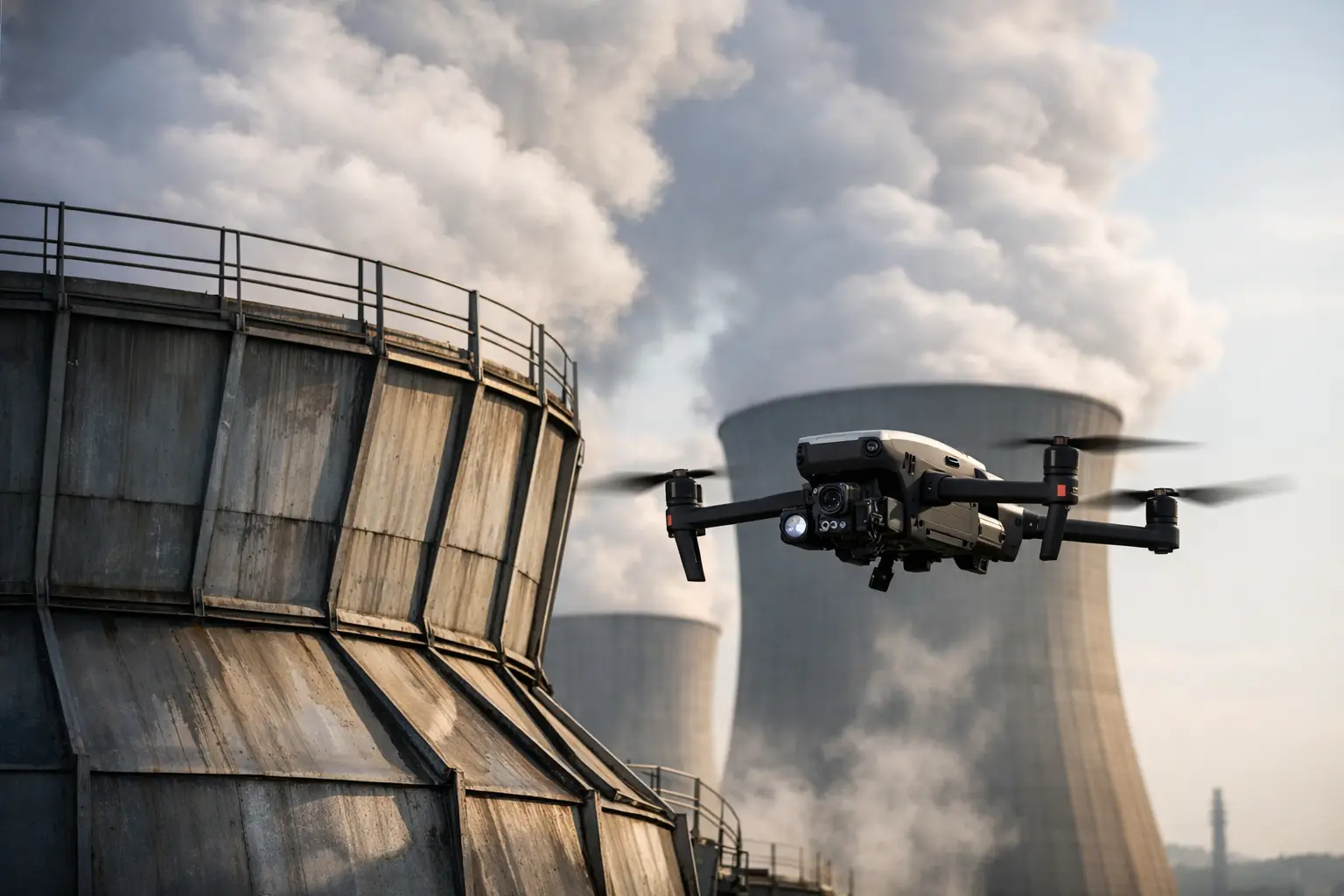
For industrial and infrastructure assets, drones are especially valuable when the traditional alternative involves lifts, rope access, shutdowns, or confined work positioning. Aerial imagery can support initial claims review, pre-repair documentation, and follow-up condition records while limiting disruption. In these cases, compliance is tied not only to regulations but to whether the operator understands how to work around complex sites responsibly.
Where the answer becomes it depends
Some insurance uses are straightforward. Others depend on the asset, the jurisdiction, the carrier, and the type of loss.
For example, using drones for broad catastrophe documentation is usually easier than using them for a highly technical causation dispute. In a simple commercial roof claim, aerial imagery may be enough to support a desk review or help guide the next site visit. In a complex industrial loss, drone data may only be one part of a larger file that also includes engineering review, maintenance history, thermal analysis, and ground-level inspection.
There is also a difference between compliance and admissibility inside a workflow. A carrier may accept drone imagery for internal review but still require an engineer, adjuster, or specialist to interpret conditions within their professional scope. That does not reduce the value of the drone inspection. It just defines its role correctly.
Privacy and property access can also change the compliance picture. Flying over a site for insurance purposes does not remove the need for authorization, site coordination, or sensitivity to adjacent properties. Commercial operators should treat this as standard operating discipline, not an afterthought.
How to tell if a drone provider is insurance-ready
If you are evaluating a provider, the best question is not whether they own good equipment. It is whether they can support an insurance file without creating new uncertainty.
An insurance-ready provider should be able to explain how they manage Part 107 compliance, preflight planning, and site-specific safety procedures. They should be insured, experienced in commercial or industrial environments, and comfortable delivering organized inspection documentation rather than a folder of unlabeled images.
They should also understand that speed matters, but not at the expense of field discipline. Fast deployment is valuable in claims and catastrophe response, yet rushed operations can create documentation gaps that slow decisions later.
For large losses or high-consequence facilities, experience counts. A provider used to residential photo flights may not be prepared for active construction sites, utility infrastructure, plant environments, or restricted operating conditions. This is one reason organizations often work with field-tested firms such as Air Reel Technologies for complex assets where dependable execution matters as much as the imagery itself.
Are drone inspections insurance compliant for commercial and industrial assets?
For commercial and industrial assets, the short answer is yes, drone inspections are often insurance compliant when they are performed by qualified professionals and integrated into the correct workflow. They are especially effective for rapid loss documentation, condition records, underwriting support, catastrophe response, and hard-to-access visual assessments.
The longer answer is that compliance comes from the full operating picture. Certified pilot. Proper insurance. Site coordination. Safe procedures. Useful deliverables. Clear scope. If one of those pieces is missing, the inspection may still produce images, but it may not produce confidence.
That is why experienced insurance teams do not ask only whether a drone can fly the site. They ask whether the resulting data will hold up inside a real claims, underwriting, or risk-management process.
For organizations responsible for expensive facilities, active job sites, and critical infrastructure, that is the right standard. The goal is not simply to get airborne. The goal is to capture accurate visual intelligence in a way that supports decisions, reduces field exposure, and fits the compliance expectations already built into the work.